Why Does SEO for Personal Injury Lawyers Matter
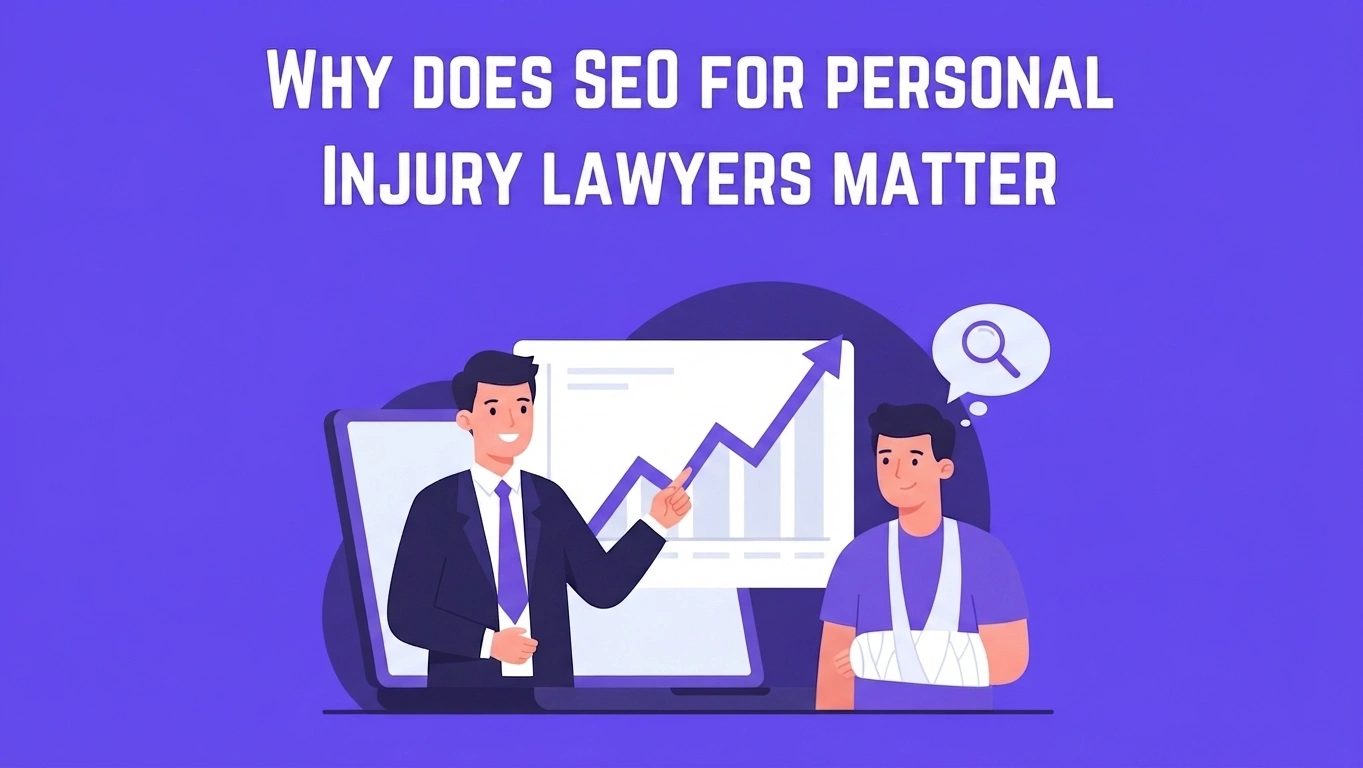
A personal injury law firm does not need website traffic from everyone. It needs to reach people who may have a valid claim, live within the firm’s service area, and are ready to speak with an attorney.
That is where search engine optimization can make a meaningful difference. A strong SEO strategy helps a law firm appear when an injured person searches for information about an accident, insurance claim, filing deadline, or local attorney. It can also help the firm explain its services, establish credibility, and make the next step clear.
However, rankings alone do not create business growth. Effective SEO must connect the right search query with the right service page, helpful information, and a reliable intake process. When these pieces work together, a firm has a better opportunity to generate qualified inquiries instead of simply increasing visitor numbers.
Why Does SEO Matter for Personal Injury Lawyers?
Prospective clients often use search engines when they need immediate answers about an injury, insurance dispute, or potential legal claim. A well-structured website can place a law firm in front of these people while they are actively researching their options.
Unlike broad advertising that may reach many people with no current need for legal help, SEO can target searches connected to specific accidents, injuries, locations, and legal questions. It can also help smaller firms compete in selected practice areas or geographic markets without trying to reach everyone.
Effective SEO for personal injury lawyers combines helpful content, local visibility, technical website improvements, and clear contact options. The objective should not be traffic alone. It should be attracting visitors whose needs, location, and circumstances match the services the firm provides.
SEO cannot guarantee rankings, consultations, or signed cases, but it can create a more reliable path between people searching for legal help and the attorneys equipped to assist them.
What Is a Qualified Personal Injury Lead?
A qualified lead is not simply anyone who calls a law firm or completes a contact form. It is a prospective client whose situation appears to fit the firm’s location, practice areas, and case acceptance criteria.
For example, a law firm may consider where the accident occurred, when it happened, what type of injury was involved, whether another party may have been responsible, and whether the person has already accepted a settlement. The intake team may also need to determine whether the matter falls within the jurisdictions where the firm practices.
This distinction matters because two campaigns can generate the same number of inquiries while producing very different business results. One may create many calls about unrelated legal problems, while another generates fewer calls from people with relevant personal injury matters.
A useful SEO strategy should therefore be built around case fit and search intent, not raw traffic volume.
How Does SEO Connect Search Intent With Legal Services?
People use different searches at different stages of an injury claim. Someone searching “what should I do after a car accident” may be gathering basic information. A person searching “car accident lawyer near me” may be closer to contacting a firm. Someone else may search for a law firm or attorney by name after receiving a recommendation.
These searches reflect different intentions. A personal injury website should have content that serves each stage without forcing every visitor directly into a sales message.
Educational articles can answer early questions about evidence, insurance communication, medical documentation, and the claims process. Practice-area pages can explain the types of cases a firm handles. Local pages can help visitors determine whether the firm serves their area. Attorney biographies and contact pages can provide additional reassurance before someone calls.
SEO works best when each page has a defined purpose and gives visitors a logical next step.
Is SEO Better Than Paid Advertising for Law Firms?
SEO and paid advertising serve different roles. Paid search can create immediate visibility for selected keywords, but traffic generally stops when the advertising budget is paused. SEO usually takes longer to develop, yet useful pages and earned visibility may continue attracting visitors over time.
Referrals are also valuable because they come with an existing level of trust. However, referral volume can be inconsistent and difficult to scale. Legal directories may increase exposure, but they often place several competing attorneys on the same page.
A personal injury law firm does not necessarily need to choose only one channel. Paid advertising may support immediate campaigns, while SEO builds longer-term visibility. Referrals, community relationships, and directories can contribute additional inquiries.
The right mix depends on the firm’s market, budget, goals, capacity, and case priorities. Every channel should ultimately be evaluated by the quality of the cases it helps produce.
Why Is Local SEO Important for Personal Injury Lawyers?
Personal injury cases are often connected to a particular city, state, or jurisdiction. Prospective clients also tend to prefer attorneys who serve their area and understand the relevant legal system. This makes local SEO an important part of attracting appropriate inquiries.
A complete Google Business Profile can help a firm appear in local search and Google Maps. The profile should include accurate business information, appropriate categories, current hours, contact details, and authentic photos. Reviews and professional responses may also help prospective clients evaluate the firm.
According to Google Business Profile guidance, local results are mainly influenced by relevance, distance, and prominence. A firm cannot pay Google for a better local organic ranking. Instead, it should provide complete information and build a credible local presence.
Local SEO should also include consistent business details across trusted directories, locally relevant website content, and clear information about the areas the firm genuinely serves. Creating dozens of nearly identical city pages is not a substitute for useful local information.
How Can Helpful Content Attract Better Leads?
Legal content can help prospective clients understand whether a firm handles the type of problem they are facing. A detailed truck accident page, for example, is more likely to attract relevant visitors than a generic page claiming the firm handles every possible legal issue.
Useful content may answer questions about filing deadlines, insurance adjusters, medical records, evidence preservation, legal fees, and what happens during a claim. It should explain general concepts without promising an outcome or attempting to replace advice based on a reader’s specific circumstances.
Google recommends creating content primarily to benefit people rather than manipulate search rankings. Its people-first content guidance encourages original information, clear sourcing, demonstrated expertise, and content that leaves readers feeling they have learned enough to move forward.
For law firms, this means content should reflect actual legal knowledge and client concerns. Attorneys or qualified legal reviewers should verify legal explanations, jurisdiction-specific details, and claims about the firm before publication.
How Does Trust Affect Personal Injury SEO?
An injured person may be dealing with medical bills, lost income, physical pain, and uncertainty about the future. Choosing an attorney in that situation requires more than finding a page with the right keywords.
A trustworthy law firm website should make it easy to identify who created or reviewed its legal content. Attorney biographies should accurately describe education, licensing, admissions, and relevant areas of practice. Pages should include appropriate review dates, disclaimers, sources, and contact information.
Case results and testimonials must also be presented carefully. Past outcomes do not guarantee future results, and marketing claims should not create unrealistic expectations. The Federal Trade Commission states that advertising claims must be truthful, evidence-based, and neither deceptive nor unfair. Law firms must also consider the professional advertising rules that apply in the jurisdictions where they practice.
Trust supports both readers and SEO. A page that provides verifiable information, transparent authorship, and realistic guidance offers more value than one filled with exaggerated claims.
What Technical SEO Issues Can Cost a Firm Leads?
Even excellent legal content may perform poorly if search engines cannot access the website or visitors struggle to use it. Technical SEO creates the foundation that allows pages to be discovered, understood, and navigated.
A personal injury website should work properly on mobile devices because an injured person may be searching from a phone immediately after an accident or medical appointment. Pages should load quickly, text should be readable, and important buttons should be easy to use.
Search engines also need logical navigation, crawlable links, accurate page titles, useful headings, and clear relationships between related pages. Duplicate content, broken links, indexing problems, and slow pages can weaken both the user experience and organic visibility.
Structured data may help search engines interpret information about the organization, attorneys, breadcrumbs, and other appropriate page elements. It does not guarantee enhanced search results, but proper implementation can help communicate the site’s content more clearly.
How Can a Law Firm Turn SEO Traffic Into Inquiries?
Getting someone to a website is only the first step. The visitor must quickly understand what the firm does, where it practices, and how to request help.
Practice-area pages should have a visible phone number and clear contact option. Mobile visitors may appreciate a click-to-call button, while others may prefer a short form. Forms should request only the information necessary for an initial response and should not imply that submitting one automatically creates an attorney-client relationship.
Trust signals should be specific and verifiable. These may include attorney credentials, office information, professional memberships, client reviews, and clearly explained services. Firms should avoid aggressive pop-ups or repeated claims that interrupt the reader.
The intake process also matters. If calls go unanswered or online inquiries receive no timely response, stronger search visibility will not solve the underlying problem.
Which SEO Metrics Actually Matter?
Keyword rankings and organic traffic can show whether visibility is improving, but they do not reveal whether the campaign is generating suitable cases.
A personal injury firm should consider tracking:
- Qualified inquiries from organic search
- Consultations scheduled from those inquiries
- Signed cases attributed to organic search
- Qualification rates by page or search topic
- Cost per qualified lead
- Conversion rates for calls and contact forms
- Case types and service areas producing valuable inquiries
The intake team can provide information that analytics platforms cannot. If a page generates many calls about cases the firm does not accept, the SEO team may need to adjust its targeting or content. If another page produces fewer inquiries but a high percentage become consultations, that page may deserve further investment.
This feedback loop turns SEO from a traffic project into a business development strategy.
What Personal Injury SEO Mistakes Should Firms Avoid?
One common mistake is targeting keywords with the highest search volume without considering whether those searches match the firm’s services. Another is creating interchangeable pages for many cities with little original local value.
Law firms should also avoid publishing generic articles that provide no insight beyond what already appears across competing websites. Other problems include inaccurate legal content, outdated attorney information, fabricated reviews, unsupported success claims, weak mobile performance, and reporting that counts every call as a qualified lead.
SEO should never be treated as a guaranteed shortcut. Search visibility changes as competitors, websites, user behavior, and search systems evolve. Sustainable growth requires ongoing evaluation, accurate content, ethical marketing, and realistic expectations.
Why Choose Click Typhoon for Personal Injury SEO?
Click Typhoon provides SEO services designed specifically for personal injury law firms. Its approach includes local SEO, practice-area content, technical improvements, conversion optimization, and performance tracking.
This combined approach matters because qualified lead generation rarely depends on one tactic. A firm may need stronger local visibility, clearer service pages, better mobile performance, improved calls to action, or more accurate conversion measurement. Addressing these areas together can create a more consistent journey from search to inquiry.
Click Typhoon also emphasizes data-driven decisions, communication, transparency, and return on investment. Instead of measuring success only through rankings, an effective campaign should examine calls, form submissions, lead quality, and signed-case outcomes.
Law firms can learn more about Click Typhoon’s SEO services for personal injury lawyers and request a free SEO audit to identify visibility, content, technical, and conversion opportunities.
Frequently Asked Questions
Is SEO worth it for a personal injury law firm?
SEO may be worthwhile when a firm wants to build sustainable organic visibility and attract people actively searching for relevant legal services. Its value depends on market competition, website quality, strategy, budget, intake performance, and the firm’s ability to convert appropriate inquiries into clients.
How long does personal injury SEO take?
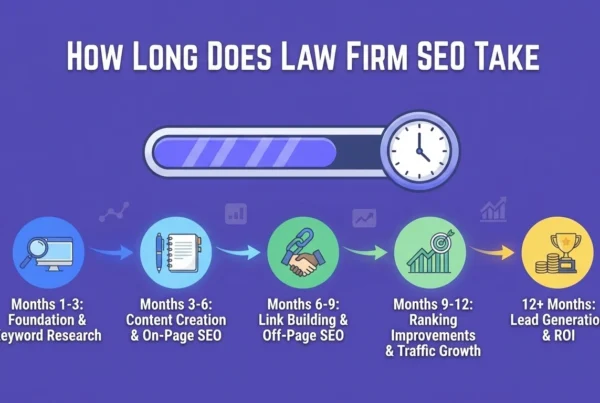
There is no universal timeline. A newer website in a competitive market may require more time than an established firm with a strong local reputation. Technical condition, content quality, competition, location, and previous marketing work can all influence progress.
Firms should expect ongoing work rather than guaranteed results by a fixed date.
Should a law firm invest in SEO or paid advertising?
The answer depends on the firm’s goals and budget. Paid advertising can create faster visibility, while SEO can build a longer-term source of organic traffic. Many firms use both, then compare qualified lead cost and signed-case results across channels.
How much does personal injury lawyer SEO cost?
Costs vary based on competition, target locations, website condition, required content, technical work, and campaign scope. Firms should request a clear proposal showing what is included, how performance will be measured, and which outcomes are not guaranteed.
Turn Search Visibility Into Better Legal Leads
Personal injury SEO should do more than increase visitor counts. It should help the right people discover a law firm, understand its services, evaluate its credibility, and take an appropriate next step.
The most effective strategy connects search intent with accurate legal content, local relevance, technical performance, conversion design, and a responsive intake process. It also measures qualified consultations and signed cases instead of treating every click as equal.
If your firm wants to understand where it is losing visibility or attracting the wrong inquiries, contact Click Typhoon to request a free SEO audit and discuss a more focused path to qualified leads.
Follow us on our socials here:
Check out some of our blogs to help with your SEO needs: