Personal Injury Lawyer Reviews: How to Get More and Handle the Bad Ones
Choosing a personal injury lawyer can feel deeply personal. Prospective clients may be dealing with pain, financial stress, insurance questions, and uncertainty about the future. Before calling a firm, many people look at online reviews to learn how previous clients describe their experience.
A strong collection of personal injury lawyer reviews can support trust and local visibility. However, law firms must manage reviews more carefully than many other businesses. A reply that seems reasonable in the moment could reveal confidential information, confirm an attorney-client relationship, or create an unnecessary public dispute.
The goal is not to chase a perfect five-star rating. It is to make it easy for clients to share honest feedback, respond professionally, protect privacy, and learn from recurring concerns.
Here is how personal injury firms can create an ethical review process, encourage genuine feedback, and handle negative reviews without making the situation worse.
Why Do Personal Injury Lawyer Reviews Matter?
Personal injury lawyer reviews can help prospective clients understand what it may be like to communicate with a firm. Reviews may discuss responsiveness, professionalism, clarity, empathy, and general client service. They can also appear prominently in Google Search and Maps, making them part of the firm’s first impression.
Reviews alone do not prove legal ability or predict case outcomes, but they may reduce uncertainty for someone deciding whom to contact.
Google also states that review quantity and positive ratings may contribute to local prominence, although reviews do not guarantee a particular ranking.
As part of SEO for personal injury lawyers, reviews work alongside accurate business information, useful website content, local relevance, links, and technical performance.
The safest way to earn more reviews is to provide consistent service and ask clients for honest feedback through a neutral, repeatable process. Firms should never buy reviews, fabricate client experiences, offer incentives for Google reviews, or pressure people to leave a particular rating.
Can Personal Injury Lawyers Ask Clients for Reviews?
Lawyers can generally invite clients to provide honest feedback, but the request must follow applicable professional conduct and advertising rules. Requirements vary by jurisdiction, so firms should confirm the rules that apply to their attorneys and marketing.
A review request should be optional, neutral, and free from pressure. It should not tell the client what to write or ask specifically for a five-star rating. The firm should also avoid suggesting that a review will influence representation, fees, communication, or case handling.
Google allows businesses to remind customers to leave reviews and provides review links or QR codes for that purpose. However, Google prohibits offering free or discounted services or other incentives in exchange for posting, changing, or removing a review. Its official review guidance also emphasizes that reviews should reflect genuine experiences.
The safest policy is straightforward: ask for honest feedback, offer no reward, and respect the client’s decision not to participate.
When Is the Best Time to Ask for a Review?
Timing affects whether a request feels natural or intrusive. A client may be more comfortable providing feedback after a meaningful service milestone, at the conclusion of representation, or after expressing appreciation for the firm’s communication.
The appropriate moment depends on the case and the client’s circumstances. Personal injury matters can involve medical treatment, financial stress, grief, and long periods of uncertainty. A review request should not interrupt a sensitive discussion or arrive while an unresolved concern is creating tension.
Firms should also consider whether requesting a review before a case ends could place unintended pressure on the client.
Whatever timing the firm chooses, it should use consistent criteria rather than asking only clients expected to provide positive feedback.
How Can a Firm Create a Consistent Review Request Process?
Review requests should be part of a documented client-service workflow. The firm can decide who sends the request, which clients receive it, and when it should be sent.
A direct link to the firm’s Google review form reduces friction. A QR code may also be useful on printed materials, provided clients are not pressured to scan it while staff members watch.
The request should make clear that feedback is optional. It should not provide a suggested testimonial or encourage clients to mention settlement amounts, medical conditions, or other private details.
The firm may record that a request was sent, but repeated reminders should be limited. A client who ignores the first request may simply not want to leave a review.
A consistent process can create a more representative review profile while reducing the risk of individual employees improvising inappropriate messages.
What Should a Law Firm Review Request Say?
A review request can be brief and neutral. For example:
Thank you for the opportunity to assist you. If you would like to share feedback about your experience with our firm, you may leave an honest review using the link below. Your participation is completely optional. Please avoid including confidential or sensitive information in your review.
This wording asks for honest feedback without requesting a particular rating. It also reminds the client not to disclose case details publicly.
Firms should adapt the message to their voice and applicable professional rules. They should avoid statements such as “Help us maintain our five-star rating” or “Leave a positive review if you were satisfied.”
What Are Review Gating and Selective Solicitation?
Review gating occurs when a business first asks customers whether they are satisfied and then directs only satisfied people to a public review platform. Dissatisfied customers may instead be sent to a private form or prevented from reaching the review link.
A law firm can offer a private feedback channel, but that option should not be used to discourage honest public reviews. Appropriately selected clients should receive the same neutral opportunity to provide feedback.
Selective solicitation can also happen when employees ask only clients who have already praised the firm. The Federal Trade Commission notes that requesting reviews only from customers expected to be happy could violate the FTC Act depending on the circumstances.
A more credible approach uses consistent criteria and allows clients to decide what they want to say.
How Should Lawyers Respond to Positive Reviews?
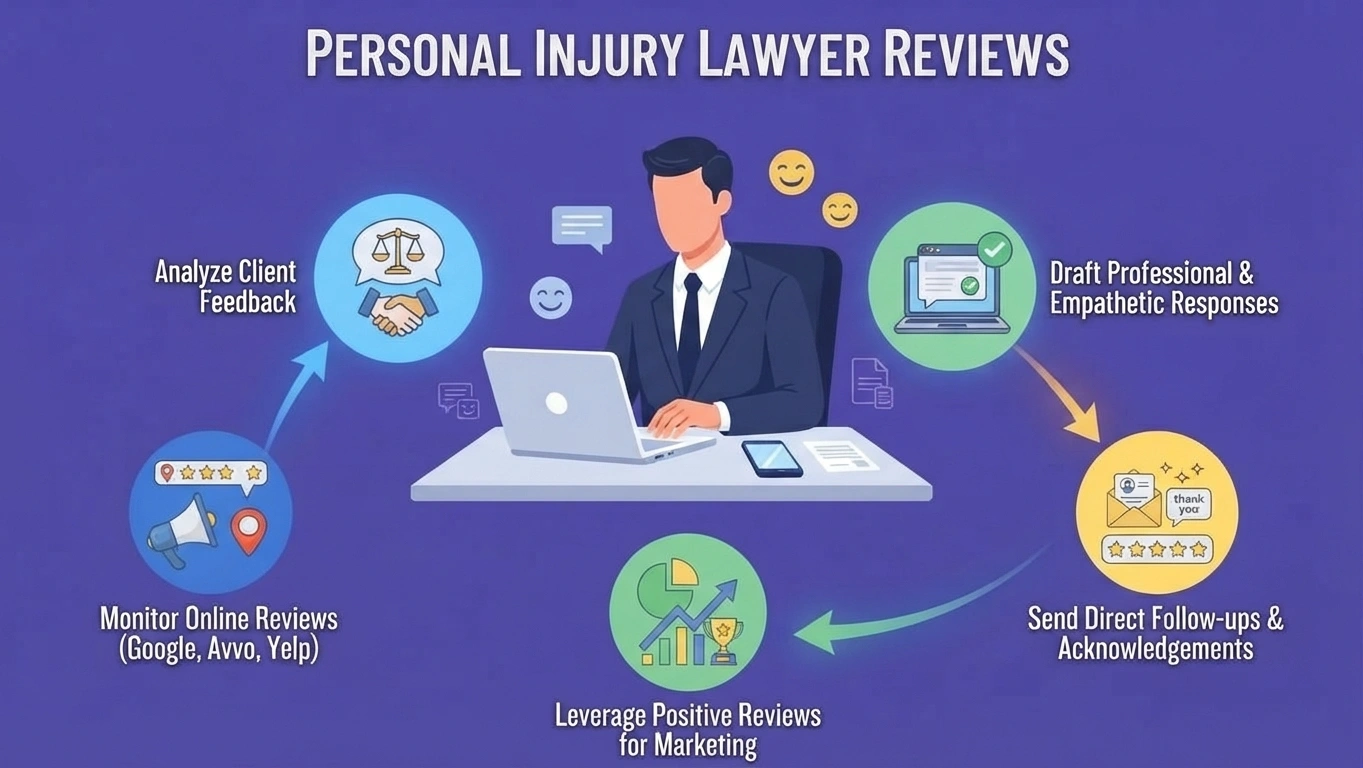
A positive review may deserve a simple thank-you, but even an appreciative response can create confidentiality concerns. The firm should avoid confirming that the reviewer was a client or discussing the service provided.
A safe response might say:
Thank you for taking the time to share your feedback. We appreciate your thoughtful comments and are glad you had a positive experience with our team.
The response should remain general. There is no need to mention the accident, injury, settlement, representation, or outcome.
Firms should also avoid copying the exact same reply under every review. Small variations can feel more genuine, while approved response guidelines can help staff protect confidential information.
How Should a Lawyer Respond to a Negative Review?
A negative review can be frustrating, particularly when the firm believes the account is unfair or incomplete. The first step should be to avoid responding emotionally.
The firm can review its internal records and speak with appropriate team members to determine whether the comment reflects a service issue, misunderstanding, fake review, or policy violation.
A public response should remain calm and general. It should not confirm that the reviewer was a client or disclose case facts, communications, medical conditions, settlement discussions, or reasons behind legal decisions.
A suitable response could say:
Thank you for sharing your concerns. Our firm takes feedback about client service seriously. Because we respect privacy, we cannot discuss individual matters publicly. Please contact our office directly so the appropriate team member can review your concerns.
This response avoids disclosing protected information while moving the conversation to a private channel.
If the review raises complicated ethical, legal, or reputational issues, the firm should seek appropriate professional guidance before replying.
Should a Firm Respond to Every Negative Review?
Not every review needs a detailed response. A short acknowledgment may be appropriate when a genuine reviewer raises a service concern. However, engaging with obvious spam, harassment, or repeated provocation may only draw more attention to the issue.
If a review violates platform rules, the firm can report it rather than argue publicly. Screenshots, links, dates, and other relevant information should be saved before reporting the content.
The firm should avoid writing statements such as “You were never our client,” which may reveal information about its relationship with the reviewer. A safer approach is to say that the firm cannot identify the matter from the information provided and invite private contact.
Once a professional response and private contact option have been provided, further discussion should generally move away from the review platform.
Can a Law Firm Remove a Bad Google Review?
A law firm cannot remove a review simply because it is negative or uncomfortable. Google may remove content that violates its policies, but genuine criticism will not normally qualify for removal just because the business disagrees with it.
Reviews may be reportable when they involve spam, impersonation, conflicts of interest, threats, harassment, irrelevant content, or other policy violations.
The FTC’s Consumer Reviews and Testimonials Rule Q&A addresses fake reviews and review suppression. It prohibits certain deceptive practices and warns against using intimidation or groundless legal threats to prevent or remove negative reviews.
A firm may contact a reviewer privately to understand a legitimate concern, but it should not offer incentives for removing criticism or pressure someone into changing an honest account.
What Should a Firm Do About a Fake Review?
A suspected fake review should be documented before the firm takes action. Save screenshots, the reviewer’s profile information, the date, and any related communications.
The firm can check its records internally, but it should not publish private information to prove that the review is false. A public dispute about whether someone was a client can create confidentiality and reputational concerns.
The review should be flagged using the most appropriate platform-policy category. If Google requests additional evidence, the firm can provide it through the designated process rather than posting it publicly.
A neutral response may state that the firm cannot identify the matter from the information in the review and invite the writer to contact the office.
Serious defamatory allegations, threats, or extortion may require legal or ethics advice tailored to the circumstances.
How Can Negative Reviews Improve Client Service?
Not every negative review is accurate, but repeated themes deserve attention. Complaints about unanswered calls, unclear updates, long response times, or confusing expectations may reveal an operational problem.
A firm should separate emotional language from actionable feedback. One angry comment may not represent a pattern, but several similar comments could indicate that clients are experiencing the same difficulty.
Review trends can be discussed with attorneys, intake staff, case managers, and marketing teams without exposing unnecessary client information. The firm can then adjust communication standards, onboarding materials, response expectations, or staff training.
The strongest reputation strategy begins with service. Marketing can help more people find the firm, but it cannot permanently hide recurring client-experience problems.
Common Review Management Mistakes
Law firms should avoid:
- Buying or fabricating reviews
- Asking employees or relatives to pose as clients
- Offering incentives for Google reviews
- Requesting only five-star feedback
- Providing clients with scripted testimonials
- Revealing confidential information in public responses
- Arguing with reviewers or making personal attacks
- Using groundless threats to suppress criticism
- Posting fake negative reviews about competitors
- Ignoring recurring client-service complaints
These practices can violate platform policies, consumer-protection requirements, or professional obligations while damaging the trust the review strategy was meant to build.
How Do Reviews Support SEO?
Reviews can complement a broader SEO strategy by strengthening a firm’s Google Business Profile and giving potential clients more information about its service experience.
Google explains that review count and positive ratings may contribute to local prominence. However, rankings also depend on relevance, distance, links, business information, website quality, and other factors.
Reviews also influence what happens after a firm appears in search results. Recent, authentic feedback may encourage more people to visit the website or call the office.
Review management should therefore work alongside useful content, local pages, technical improvements, and accurate business information rather than being treated as a shortcut to rankings.
How Should a Firm Measure Its Review Strategy?
A review program can be evaluated by tracking how many neutral requests were sent, how frequently new reviews appeared, how quickly the firm responded, and which service themes occurred repeatedly.
Average rating is only one measurement. Firms should also consider the recency, detail, authenticity, and distribution of reviews. Ten thoughtful reviews may provide more useful information than dozens of vague comments.
The firm can compare review activity with website visits, calls, and qualified inquiries, but it should avoid assuming every change was caused by reviews. Search visibility, advertising, seasonality, and referrals may also influence results.
Internal reporting should protect client privacy and does not need to include confidential case details.
Why Choose Click Typhoon for Law Firm Reputation and SEO?
Click Typhoon helps law firms connect ethical review management with Google Business Profile optimization, local visibility, website content, and performance tracking.
The objective is not to manufacture ratings or promise the removal of legitimate criticism. A sustainable strategy focuses on authentic feedback, platform compliance, professional responses, and better client experiences.
Click Typhoon can also help firms understand how review activity fits within their broader SEO strategy, including the relationship between local profiles, organic visibility, website quality, and qualified inquiries.
No marketing provider can guarantee a particular rating, local ranking, number of reviews, or volume of signed cases.
Frequently Asked Questions
Can personal injury lawyers ask clients for Google reviews?
Yes, law firms can generally request honest feedback, subject to applicable professional rules. The request should be optional, neutral, and free from incentives or pressure.
Can a law firm offer an incentive for a Google review?
No. Google prohibits incentives such as free or discounted goods or services in exchange for posting, changing, or removing reviews. Other platforms may have their own policies.
How should a lawyer respond to a one-star review?
The response should be brief, calm, and respectful. It should avoid confirming a client relationship or revealing confidential information. The reviewer can be invited to contact the firm privately.
Can lawyers reveal case details to defend themselves online?
Lawyers should not assume that a public review permits them to reveal confidential information. Professional duties vary by jurisdiction, so the firm should seek appropriate ethics guidance when necessary.
Can a fake Google review be removed?
It may be removed if it violates Google’s policies, but removal is not guaranteed. The firm should document the review, report it through the appropriate process, and avoid a public argument.
Should a law firm respond to every review?
Not necessarily. Responses can show attentiveness, but firms should prioritize meaningful feedback and avoid unnecessary replies. Spam and harassment may be better reported than engaged with.
How many reviews should a personal injury law firm have?
There is no ideal number for every firm. Review quantity depends on the firm’s size, age, client volume, and market. Consistent, authentic feedback is more important than reaching an arbitrary target.
Do Google reviews help a law firm rank locally?
Google states that review quantity and positive ratings may contribute to local prominence. Reviews do not guarantee rankings because local results also depend on relevance, distance, and other signals.
Build Trust Through Honest Client Feedback
A strong review profile is built through consistent service, neutral requests, careful responses, and respect for client privacy.
Personal injury firms do not need a perfect rating to demonstrate professionalism. They need an authentic record that helps prospective clients make informed decisions.
If your firm wants to develop a responsible review strategy and strengthen its local search presence, explore Click Typhoon’s Personal Injury Lawyer SEO services and request a consultation.
Follow us on our socials here:
Check out some of our blogs to help with your SEO needs: