Personal Injury Lawyer Website Design: 7 Elements That Convert Visitors Into Clients
Someone who visits a personal injury law firm’s website may be in pain, worried about medical bills, or unsure whether they have a valid claim. They are not simply browsing attractive designs. They are looking for clear information and a trustworthy path forward.
A polished website can make a strong first impression, but appearance alone does not produce qualified inquiries. Visitors need to understand what the firm does, confirm that it handles their type of case, and find a simple way to contact someone.
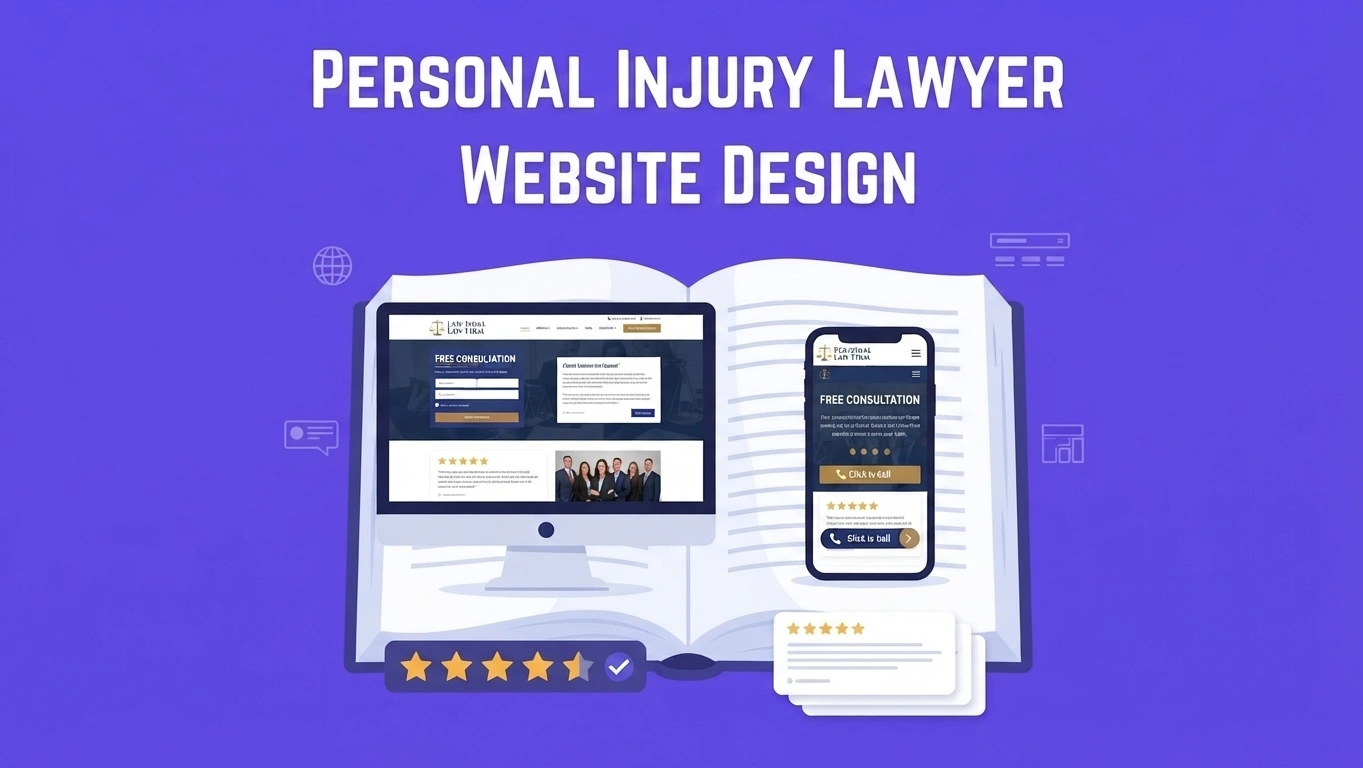
Effective personal injury lawyer website design brings together clear messaging, useful content, mobile performance, accessibility, trust signals, and focused calls to action. These elements help visitors make informed decisions while supporting the firm’s broader marketing goals.
No website can guarantee inquiries or signed cases. However, removing uncertainty and unnecessary barriers can make it easier for suitable prospects to contact the firm.
What Makes a Personal Injury Lawyer Website Effective?
An effective personal injury lawyer website should quickly answer four questions: Does this firm handle my type of case? Does it serve my location? Why should I trust it? How can I contact someone?
Visitors should not have to search through complicated menus or long blocks of promotional language to find those answers. A clear headline can identify the firm’s services and geographic focus, while practice-area pages explain relevant claims in understandable language.
Attorney biographies, accurate credentials, authentic photographs, reviews, and appropriately presented case results can help establish credibility. The site should also load quickly, work properly on mobile devices, accommodate users with disabilities, and provide clear contact options.
These features can also support SEO for personal injury lawyers by improving content clarity, navigation, and user experience.
The goal is not to pressure every visitor into calling. It is to help suitable visitors understand their options and decide whether contacting the firm is an appropriate next step.
1. A Clear Value Proposition Above the Fold
The top section of a webpage is often called the area above the fold because visitors can see it before scrolling. This section should immediately explain who the firm helps and what type of legal work it performs.
A headline such as “Personal Injury Lawyers Helping Accident Victims in [Location]” is clearer than a vague statement such as “Fighting for Justice.” Supporting text can mention major case types, the geographic area served, and consultation availability when accurate.
A visible phone number or consultation button should appear near the headline. Mobile users should be able to tap the phone number rather than copy it manually.
The opening section should avoid excessive information. Its purpose is to orient the visitor and provide a logical next step. Details about attorneys, case types, fees, and the legal process can appear farther down the page.
Firms should also avoid unsupported phrases such as “the best personal injury lawyer” or promises about settlements. Clear, factual language builds more confidence than exaggerated claims.
2. Simple Navigation Based on Client Needs
Website navigation should reflect the questions potential clients ask rather than the firm’s internal organization. Visitors usually want to find practice areas, attorney information, locations, FAQs, and contact details.
Menu labels should use familiar terms such as “Car Accidents,” “Truck Accidents,” and “Wrongful Death.” Technical legal labels may confuse people who do not yet know how their situation is categorized.
A focused menu is easier to use than one containing dozens of competing options. Firms with many services can group related case types under a clear practice-area menu while giving priority services dedicated pages.
Navigation must also work on mobile devices and with a keyboard. Visitors should be able to understand where they are and reach important pages without broken links or confusing menus.
Internal links can guide readers from general information to relevant service pages, attorney biographies, and consultation options. This structure also helps search engines understand how related pages connect.
3. Trust Signals That Are Specific and Verifiable
People are cautious when choosing an attorney. A website should provide enough credible information to help visitors evaluate the firm without relying on vague claims.
Attorney biography pages can include bar admissions, education, professional background, relevant experience, and community involvement. Authentic photographs of attorneys, staff, and the office can also make the firm easier to recognize.
Reviews and testimonials may help visitors understand past client experiences, but they must be presented accurately. Firms should obtain appropriate permission, avoid editing feedback in a misleading way, and follow applicable professional advertising rules.
Case results can provide context when they are truthful and appropriately explained. Past results do not guarantee future outcomes, and each matter depends on its specific facts.
Awards, memberships, and media mentions should identify the issuing organization when appropriate. Outdated or unverifiable badges can damage credibility.
Trust also comes from basic details such as a current office address, working phone number, privacy information, secure connection, and accurate attorney profiles.
4. Detailed Practice-Area Content
Many visitors arrive through a page about a specific accident or injury. That page should provide enough information to help them understand whether the firm handles their issue.
A useful practice-area page may explain common causes of the accident, possible injuries, relevant evidence, general claim procedures, and reasons someone might contact an attorney. The content should use clear language rather than unnecessary legal terminology.
Each page should also be distinct. Replacing “car accident” with “truck accident” in otherwise identical copy does not address the different concerns involved in those cases.
Statements about deadlines, compensation, liability, and legal rights should be accurate and appropriately qualified because rules vary by jurisdiction and circumstance.
Detailed content supports SEO by helping both search engines and visitors understand the page. More importantly, it allows prospective clients to learn about the firm before making contact.
A practice-area page should end with a relevant next step, such as calling the office or requesting a consultation, without interrupting every section with aggressive CTAs.
5. Fast, Mobile-Friendly Performance
Many people search for attorneys from smartphones while dealing with appointments, work, and other responsibilities. A website that is slow or difficult to use on a small screen may lose visitors before they reach the main content.
Responsive design allows pages to adjust to different screen sizes. Text should be readable without zooming, buttons should be easy to tap, and forms should fit the screen. Large images and videos should also be compressed to avoid unnecessary delays.
Page elements should remain stable while loading. Menus, accordions, forms, and buttons should respond quickly and predictably.
Google’s Core Web Vitals guidance identifies loading performance, responsiveness, and visual stability as important parts of real-world user experience. Good scores can support usability, but they do not guarantee rankings or conversions.
Performance should also be tested on real devices and internet connections rather than only on fast office computers.
6. Accessible Design and Contact Forms
An accessible website allows more people, including those with disabilities, to obtain information and contact the firm.
Readable color contrast can help people with limited vision. Descriptive alt text explains meaningful images to screen-reader users, while captions make videos more accessible to people who are deaf or hard of hearing. Proper headings also make pages easier to navigate.
Forms should include visible labels, clear instructions, keyboard access, and useful error messages. If a required field is missing, the website should explain what needs to be corrected instead of relying only on color.
The U.S. Department of Justice’s Guidance on Web Accessibility and the ADA identifies common barriers such as poor contrast, missing image alternatives, inaccessible forms, and mouse-only navigation.
Accessibility should be considered throughout design, development, content creation, and maintenance. Automated tools can help identify problems, but they are not a substitute for properly designed pages and manual testing.
7. Clear and Low-Friction Calls to Action
A visitor who decides to contact the firm should not have to search for a phone number or complete a lengthy questionnaire.
Calls to action should use specific language such as “Request a Consultation,” “Call to Discuss Your Case,” or “Contact Our Legal Team.” The wording should match the firm’s actual intake process.
Contact options should appear in predictable locations, including the header and final CTA. Mobile users should also have access to a tap-to-call button.
Initial forms should request only the information necessary to begin screening the inquiry. A name, contact method, general case type, location, and brief message may be enough for the first step.
The page should explain what happens after submission. If the firm cannot promise an immediate response, it should not claim that someone will reply within minutes.
Intrusive popups, automatic videos, misleading countdown timers, and repeated full-screen prompts can make a website feel aggressive. A clear and respectful CTA is often more effective than manufactured urgency.
How Should a Personal Injury Website Structure Its Homepage?
A homepage should guide visitors through a logical sequence rather than trying to explain every possible legal issue.
The opening section can identify the firm’s focus, location, and primary CTA. The next section may introduce major practice areas so visitors can quickly find relevant information.
Trust content can follow, including attorney introductions, credentials, authentic reviews, and appropriately explained case results. A short explanation of the consultation or case process can also reduce uncertainty.
The page may then answer common questions and end with a clear contact section.
The exact structure will vary between a solo attorney, multi-location firm, and national practice. What matters is that every section helps answer a question or directs visitors to a useful next step.
How Do Landing Pages Improve Conversion Rates?
A landing page focuses on one audience, service, location, or campaign.
Someone who clicks an advertisement about truck accident claims should reach a page discussing truck accident cases, not a general homepage filled with unrelated services.
The headline, content, trust signals, and CTA should match the visitor’s original search or advertisement. This consistency helps reassure visitors that they reached the correct page.
A focused landing page may remove unnecessary navigation and distractions, but it should still provide enough information for visitors to evaluate the firm.
Landing pages should also be tested. Firms can compare headlines, form length, CTA wording, and page structure while avoiding changes that make the content misleading or difficult to access.
Why Must Website Content Follow Legal Advertising Rules?
Law firm websites are marketing materials and may be subject to professional advertising rules. Requirements vary by jurisdiction, so firms should review applicable requirements and obtain appropriate guidance.
Credentials, testimonials, case results, comparisons, and fee statements must be accurate. Disclaimers should also be clear and placed where visitors can reasonably see them.
The website should avoid guarantees about outcomes or compensation and clarify that submitting a form does not necessarily create an attorney-client relationship.
Privacy deserves special attention as well. Contact forms, chat tools, call tracking, analytics platforms, and advertising technologies may collect visitor information. Firms should understand what these systems collect, where the data goes, and how it is protected.
How Do You Measure Whether a Law Firm Website Converts?
A website should be measured using outcomes that matter to the firm.
Useful data may include phone calls, form submissions, consultation requests, qualified inquiries, retained clients, and the practice areas generating those contacts.
Total conversions do not tell the full story. Ten unsuitable inquiries may provide less value than two prospects who closely match the firm’s case criteria.
Tracking should connect conversions with pages and traffic sources when possible. This can show whether visitors from organic search, paid advertising, referrals, or local listings behave differently.
The firm should also protect confidential information while measuring performance. Analytics platforms generally do not need detailed case facts or sensitive medical information.
Common Personal Injury Website Design Mistakes
Frequent problems include:
- Generic headlines that do not explain the firm’s services
- Slow pages with oversized images or unnecessary scripts
- Long and confusing contact forms
- Hidden phone numbers
- Thin or duplicated practice-area pages
- Excessive reliance on generic stock photographs
- Missing accessibility features
- Unsupported claims and guaranteed outcomes
- Too many popups or competing calls to action
Correcting these issues can improve clarity and usability even before the firm redesigns the entire website.
How Does Website Design Support SEO?
Website design and SEO affect one another. Search visibility may bring visitors to the website, but confusing pages can prevent those visitors from learning about the firm or making contact.
Clear navigation helps users and search engines find important pages. Logical headings make content easier to understand, while internal links connect related services and resources. Mobile performance and accessible design can improve the experience for a wider audience.
Effective SEO should therefore consider more than keywords and rankings. It should connect search intent with useful information and a practical next step.
Design alone does not control rankings, and SEO alone does not guarantee conversions. The strongest approach aligns technical performance, content, visibility, trust, and intake procedures.
Why Choose Click Typhoon?
Click Typhoon helps law firms connect website design with SEO, content strategy, conversion planning, and performance measurement.
Instead of treating the website as a digital brochure, the strategy considers how potential clients search, what information they need, and where they may encounter barriers.
This approach can include reviewing page structure, mobile usability, practice-area content, calls to action, technical performance, and conversion tracking. Recommendations should reflect the firm’s services, target markets, and qualified-client goals.
No agency can responsibly guarantee rankings, leads, or signed cases. Results depend on competition, reputation, traffic quality, budget, intake, and many other factors. Click Typhoon focuses on transparent strategy and ongoing improvement rather than unsupported promises.
Frequently Asked Questions
What should a personal injury lawyer website include?
It should include clear service information, attorney biographies, practice-area pages, office details, trust signals, accessible contact options, privacy information, and accurate calls to action.
How much does a personal injury law firm website design cost?
Cost depends on page count, custom design, development requirements, content, integrations, accessibility work, and ongoing support. Firms should compare scope and ownership terms rather than price alone.
Why is mobile design important for personal injury lawyers?
Many potential clients search on smartphones. Mobile design helps them read information, navigate pages, tap phone numbers, and submit forms without unnecessary difficulty.
Do case results help a lawyer website convert?
Accurately presented results may help visitors understand the firm’s experience. They should include appropriate context and disclaimers because previous outcomes do not guarantee future results.
Does website speed affect law firm SEO?
Page performance contributes to user experience and may support search performance, but speed is only one consideration. Fast pages do not automatically rank well or generate qualified inquiries.
Turn More Website Visits Into Meaningful Opportunities
A successful personal injury website does more than look professional. It clearly explains the firm’s services, establishes trust, answers important questions, works across devices, supports accessibility, and makes contacting the firm straightforward.
If your firm wants to identify weaknesses in its website and connect design improvements with a broader search strategy, explore Click Typhoon’s Personal Injury Lawyer SEO services and request a consultation.
Follow us on our socials here:
Check out some of our blogs to help with your SEO needs: