Why Local SEO Matters for Personal Injury Attorneys Competing for Nearby Clients
When someone is injured in an accident, the search for legal help often begins close to home. They may search for a car accident lawyer nearby, an attorney in their city, or a firm familiar with the courts and insurance practices in their area.
For personal injury attorneys, general website traffic is not always enough. A visitor outside the firm’s service area may never become a suitable client, even if they spend several minutes reading the website.
Local SEO helps law firms focus their online visibility on communities they can genuinely serve. It connects a firm’s Google Business Profile, website, local listings, reviews, service pages, and contact experience so potential clients can more easily discover the firm and understand what it offers.
The real value is not simply appearing for more searches. It is creating more opportunities to connect with nearby people whose legal needs match the firm’s services.
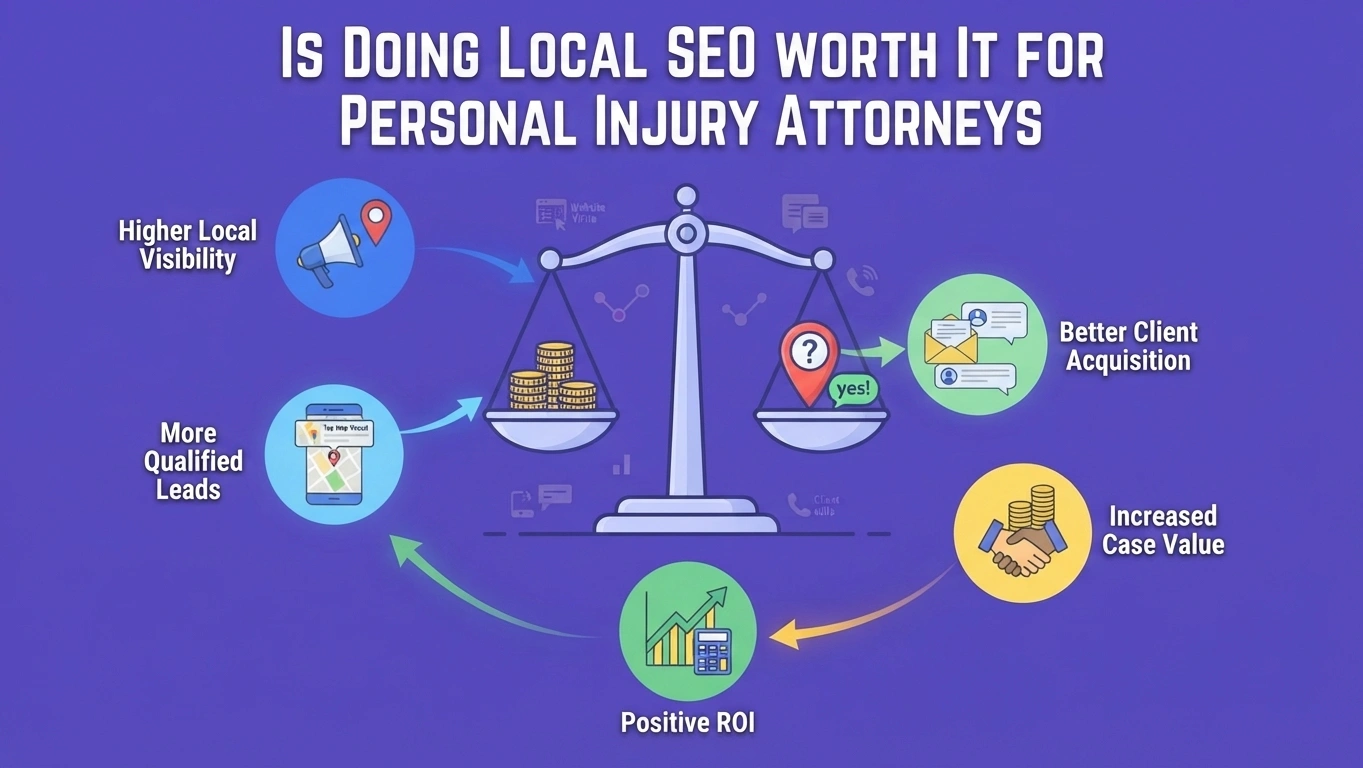
Is Doing Local SEO Worth It for Personal Injury Attorneys?
Yes, local SEO can be worthwhile because most personal injury firms serve clients within specific cities, counties, states, or legal jurisdictions.
A strong local strategy can help a firm appear when nearby people search for services such as car accident lawyers, slip and fall attorneys, or personal injury law firms. It may improve visibility in organic search results, Google Maps, and other location-based search features.
However, visibility alone does not make local SEO successful. A useful strategy combines accurate business information, helpful legal content, authentic reviews, strong website performance, and a responsive intake process.
Effective SEO for personal injury lawyers cannot guarantee rankings, calls, or signed cases. Its value should be measured through qualified inquiries, consultations, and appropriate cases rather than traffic alone.
What Is Local SEO for a Personal Injury Law Firm?
Local SEO is the process of improving a law firm’s visibility for searches connected to a particular geographic area. It helps search engines and potential clients understand what the firm does, where it is located, and which communities it serves.
This strategy may include optimizing a Google Business Profile, maintaining consistent business information, creating useful location and practice-area pages, earning authentic reviews, improving technical website performance, and building relevant local authority.
Traditional SEO may target broader legal questions, while local SEO adds geographic relevance. For example, an article about what to do after a motorcycle accident can serve readers broadly, while a city-specific page explains whether the firm handles those cases in a particular market.
Local SEO should always reflect genuine services and locations rather than creating the impression that a firm has offices or capabilities it does not have.
Why Does Location Matter in Personal Injury Searches?
Personal injury representation is closely connected to location. Attorneys must be licensed in the appropriate jurisdictions, and where an accident happened may affect applicable laws, deadlines, courts, and procedures.
Potential clients also tend to search locally. Someone injured in a collision may search for a “car accident attorney near me” or add a city or county to their query.
Geographic targeting can improve lead quality by focusing on the areas and case types the firm actually serves. This does not mean repeating a city name throughout every page. Content should instead explain the firm’s genuine connection to the area and provide useful local information.
How Does Google Determine Local Search Visibility?
Google explains that local results are mainly based on relevance, distance, and prominence.
Relevance describes how closely a business profile matches a search. Distance considers how far the business is from the searcher or named location. Prominence reflects how established the business appears, using signals that may include links, reviews, and information across the web.
According to Google Business Profile guidance, businesses should verify their profiles and keep information complete and accurate. Google also states there is no way to pay for a better local organic ranking.
A law firm cannot control every factor, but it can provide accurate information, build useful content, earn genuine recognition, and clearly communicate its services.
How Can a Google Business Profile Help a Law Firm?
A Google Business Profile can show potential clients important information before they visit the firm’s website, including its name, address, phone number, hours, reviews, photos, website link, and directions.
The firm’s public name, address, and phone number should be accurate and consistent with its website and trusted listings. Categories, hours, and contact details should also stay current.
Authentic photos can help people recognize the office and understand what to expect. Law firms should avoid adding keywords to business names unless they are part of the genuine public-facing name, and they should not create profiles for fake or ineligible offices.
Why Do Reviews Matter for Local Legal Marketing?
Reviews can help prospective clients evaluate communication, professionalism, responsiveness, and the overall client experience.
They may also contribute to local prominence, but firms should never buy reviews, publish fabricated testimonials, or pressure clients to leave only positive feedback.
Responses should remain professional and avoid revealing confidential information or confirming sensitive details about a legal matter.
The Federal Trade Commission’s advertising guidance states that advertising claims must be truthful, evidence-based, and neither deceptive nor unfair. Firms should also follow applicable attorney advertising and professional conduct rules.
How Can Local Content Attract More Relevant Leads?
Local content works best when it helps people understand whether a firm serves their area and handles their type of legal matter.
A useful location page may explain services offered in a city, how to contact the firm, and relevant local information about courts, public records, or agencies. Practice-area pages can address specific needs such as car accidents, truck collisions, pedestrian injuries, premises liability, or wrongful death.
The strongest content does more than replace one city name with another. Each page should have a clear purpose and provide original information. Creating dozens of nearly identical location pages may offer little value.
Because legal information can influence important decisions, attorneys or qualified legal professionals should review content for accuracy before publication.
How Does SEO Address Different Search Intent?
Not every searcher is ready to hire an attorney immediately. Someone asking what to do after an accident may be seeking guidance, while another person comparing local attorneys may be evaluating experience, communication, and services.
A coordinated SEO strategy can support these different needs. Blog posts answer early questions, practice-area pages explain services, location pages establish geographic relevance, attorney biographies build familiarity, and contact pages provide a clear next step.
Internal links should connect these resources naturally so visitors can move from general information to the most relevant service or contact page.
Is Local SEO Better Than Paid Search?
Local SEO and paid search have different strengths.
Paid search can provide quick visibility, but that visibility generally stops when the firm stops paying. Local SEO often takes longer, yet useful content and established local visibility may continue producing traffic over time.
Many firms benefit from using both. Paid advertising can support immediate visibility or priority case types, while local SEO builds a longer-term presence.
Neither channel should be judged only by impressions or clicks. The more useful question is how many appropriate inquiries, consultations, and signed cases each produces.
How Can Local SEO Improve Lead Quality?
Local SEO can reduce irrelevant traffic by targeting the locations, services, and search intentions that match the firm.
Marketing and intake teams should agree on what makes an inquiry qualified, then track which pages, locations, and search topics generate the strongest opportunities.
A page may attract many calls but produce few consultations because most callers need a different type of attorney. Another page may attract less traffic but consistently produce suitable cases. Intake feedback helps the firm invest in the topics that matter most.
What Can Local SEO Not Guarantee?
Local SEO cannot guarantee a top Google Maps position, a specific number of calls, or a fixed number of signed cases.
Results can be influenced by competition, searcher location, website quality, reputation, content relevance, links, reviews, and changes to search systems.
SEO also cannot fix every business problem. If calls go unanswered or inquiries receive slow responses, greater visibility may not produce more clients.
A responsible provider should explain what it can improve, what it cannot control, and how results will be measured.
What Local SEO Mistakes Should Personal Injury Firms Avoid?
Common problems include:
- Creating duplicate pages for numerous cities
- Using fake or ineligible office locations
- Publishing inconsistent business information
- Targeting areas the firm does not serve
- Buying or fabricating reviews
- Ignoring mobile website performance
- Publishing legal content without professional review
- Treating every call as a qualified lead
- Making unsupported claims about results or rankings
A smaller number of accurate, useful pages is generally more valuable than a large collection of thin pages created only to target keywords.
How Should a Law Firm Measure Local SEO?
The value of local SEO should be assessed through business outcomes as well as search visibility.
Rankings, impressions, profile views, website visits, and calls can show trends, but firms should also track qualified inquiries, consultations, and appropriate cases signed.
Reporting can be organized by practice area, location, landing page, and lead source. Cost per qualified lead may also provide more useful insight than cost per click.
Call tracking can support attribution, but it should be configured carefully so the firm’s primary public business information remains consistent. Analytics and intake systems should also handle personal information responsibly.
Why Choose Click Typhoon for Personal Injury SEO?
Click Typhoon offers SEO services developed around the competitive needs of personal injury law firms. Its strategy combines local SEO, practice-area content, technical optimization, conversion improvements, and performance tracking.
This integrated approach matters because local visibility rarely improves through one isolated change. A firm may need to correct business information, improve its Google Business Profile, strengthen website structure, publish more useful content, or simplify its contact process.
Click Typhoon also emphasizes data-driven decisions, communication, transparency, and return on investment. Meaningful reporting should connect organic visibility with calls, forms, qualified leads, and case opportunities rather than focusing only on rankings.
Firms can learn more about Click Typhoon’s SEO services for personal injury lawyers and request a free SEO audit to identify local visibility, website, content, and conversion opportunities.
Frequently Asked Questions
Is local SEO worth it for a small personal injury law firm?
Local SEO may help a smaller firm compete by focusing on specific communities, practice areas, and search intentions instead of trying to outrank every large firm for broad terms. Its value depends on the market, strategy, website, reputation, and intake process.
How long does local SEO take to show results?
There is no standard timeline. Competition, website history, technical condition, local prominence, content quality, and existing business information may all affect progress. Firms should expect ongoing improvement rather than guaranteed results by a fixed date.
What is the difference between local SEO and regular SEO?
Regular SEO improves a website’s general organic visibility. Local SEO focuses more heavily on geographic searches, Google Maps, Google Business Profile, local listings, reviews, and location relevance. Personal injury firms often benefit from both.
Does a personal injury attorney need a Google Business Profile?
An eligible law firm can benefit from a complete and accurate Google Business Profile because it helps potential clients find contact details, directions, reviews, hours, and website information in local search.
Can reviews improve a law firm’s local rankings?
Google explains that review count and positive ratings may contribute to local prominence. Reviews can also influence prospective clients. They should be authentic, obtained ethically, and handled with attention to client confidentiality.
Should a law firm create a page for every city it serves?
Only when each page has a legitimate purpose and provides useful, original information. Publishing nearly identical pages with different city names can create a poor user experience and add little value.
Reach More Nearby Clients With Focused Local SEO
Local SEO can help personal injury attorneys become more visible when nearby people search for legal assistance. Its value comes from connecting accurate location information, helpful legal content, authentic trust signals, and an effective contact process.
A successful strategy should focus on the locations, practice areas, and client needs that match the firm while measuring qualified inquiries and case opportunities instead of traffic alone.
If your firm wants to understand where it is losing local visibility or attracting the wrong inquiries, request a free SEO audit from Click Typhoon. A focused SEO strategy can help identify practical opportunities to improve visibility, relevance, and lead quality.
Follow us on our socials here:
Check out some of our blogs to help with your SEO needs: