Law Firm Lead Generation: SEO vs. Paid Ads vs. Referrals
A law firm can invest heavily in marketing and still struggle to attract the right cases. The problem is often not a lack of leads. It is a lack of qualified leads who match the firm’s location, practice areas, capacity, and case criteria.
SEO, paid advertising, and referrals are three of the most common law firm lead generation channels. Each can work, but each works differently. SEO builds organic search visibility over time. Paid ads place the firm in front of potential clients quickly in exchange for ongoing spending. Referrals transfer trust from former clients, professionals, and other attorneys.
Choosing between them should not come down to which channel produces the most phone calls. A better comparison looks at lead quality, acquisition cost, conversion rate, predictability, and long-term value.
Which Lead Generation Strategy Is Best for Law Firms?
For many law firms, the strongest strategy combines SEO, paid advertising, and referrals rather than relying entirely on one channel.
SEO can create sustainable visibility by helping practice-area pages, local pages, and educational resources appear when people search for legal help. It typically requires time and continued investment, but successful content can keep attracting visitors without a charge for every click.
Paid advertising can create faster exposure and gives firms more control over targeting, budgets, and messaging. However, competitive legal keywords can be expensive, and traffic usually stops when spending stops.
Referrals often arrive with greater initial trust because another person has recommended the firm, but referral volume can be inconsistent and difficult to scale.
The right mix depends on the firm’s practice areas, market competition, budget, intake capacity, and growth goals. A newer firm might use ads for immediate visibility while developing SEO and referral relationships, while an established practice may rely more heavily on organic search and referrals.
What Is Law Firm Lead Generation?
Law firm lead generation is the process of attracting people or organizations that may need legal services and encouraging them to contact the firm. Potential clients may discover the firm through search engines, advertisements, recommendations, directories, social media, or community relationships.
Not every inquiry is a qualified lead. Someone may live outside the firm’s jurisdiction, need help with an unsupported practice area, or have a matter that does not meet the firm’s case criteria.
A useful strategy should therefore track more than phone calls and form submissions. Qualified leads, consultations, retained clients, and appropriate cases provide a more realistic view of marketing performance.
How Does SEO Generate Leads for Law Firms?
Search engine optimization helps a law firm improve its unpaid visibility in search results. The process may include technical website improvements, local optimization, practice-area pages, location pages, attorney biographies, educational articles, internal links, and reputable external mentions.
The goal is to make the website understandable, accessible, and useful when someone searches for a relevant legal service. For example, a person injured in a collision may first search for information about insurance claims before looking for a lawyer.
SEO for personal injury lawyers may also include Google Business Profile optimization and pages that accurately explain the cases a firm handles. These assets can help connect the firm with people actively looking for legal help within its service area.
SEO does not provide guaranteed rankings or immediate results. Google’s SEO Starter Guide recommends creating useful, well-organized content that helps both users and search engines understand a website.
What Are the Advantages and Limitations of SEO?
One of SEO’s main advantages is its potential long-term value. A useful page can continue attracting relevant visitors after publication, although it still requires review and maintenance.
SEO also gives the firm control over its website, content, calls to action, and user experience. Detailed service pages, biographies, FAQs, and educational resources can help prospective clients learn about the firm before making contact.
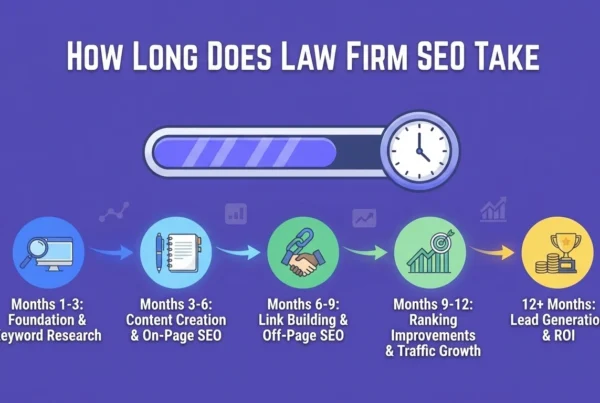
The main limitation is time. Organic visibility can take months to develop, particularly in competitive legal markets.
SEO should therefore be treated as an ongoing business investment rather than a one-time project. Publishing a few articles without addressing technical issues, local visibility, or website usability is unlikely to create a dependable lead source.
How Do Paid Ads Generate Legal Leads?
Paid advertising allows a law firm to purchase visibility on search engines, social platforms, directories, and other websites.
Search ads can appear when someone enters a targeted phrase, while social and display campaigns may introduce the firm to a selected audience. Advertisers can often control geographic areas, schedules, budgets, devices, and search terms.
Speed is one of the main advantages. A properly configured campaign can begin producing visibility much faster than an organic SEO campaign.
However, visibility does not automatically create qualified clients. Keyword targeting, advertising copy, landing pages, intake, and follow-up all affect results. Competitive legal searches can also have high click costs, making poor targeting particularly expensive.
What Are the Advantages and Limitations of Paid Ads?
Paid advertising provides control and measurable data. A firm can test different messages, landing pages, locations, and calls to action while increasing or reducing spending based on capacity.
Paid campaigns can also reveal which services and search terms attract suitable inquiries. That information may help guide the firm’s broader SEO and content strategy.
The primary limitation is continued cost. When the campaign stops, paid traffic generally stops as well. Costs may also rise as competitors bid for the same searches.
A low cost per click means little if those clicks never become suitable clients. Firms should evaluate cost per qualified lead and retained client rather than focusing only on impressions, clicks, or form submissions.
How Do Referrals Generate Leads for Law Firms?
Referral leads may come from former clients, attorneys, accountants, healthcare professionals, community contacts, and other trusted sources.
The person making the recommendation transfers some of their trust to the prospective client. Referred prospects may therefore feel more comfortable during the first conversation.
Attorney referrals may also have stronger case alignment when the referring lawyer understands the receiving firm’s practice.
Referrals develop through consistent client service, professional relationships, community participation, and a clear reputation. Unlike advertising, they cannot usually be turned on or scaled immediately.
Firms must also follow applicable professional conduct rules concerning referrals, fee-sharing arrangements, testimonials, and communications. The Federal Trade Commission’s endorsement guidance provides general expectations regarding truthful endorsements and material connections.
SEO vs. Paid Ads vs. Referrals
Each channel plays a different role in a law firm’s marketing strategy.
| Factor | SEO | Paid Ads | Referrals |
| Typical speed | Gradual | Potentially fast | Unpredictable |
| Direct traffic cost | No charge per organic click | Payment for clicks or leads | Usually relationship-based |
| Control | High | High | Limited |
| Scalability | Moderate to high | High with sufficient budget | Often limited |
| Initial trust | Built through visibility and content | Depends on the ad and website | Often higher |
| Long-term value | Potentially strong | Usually ends when spending stops | Varies by relationship |
| Measurement | Trackable with proper setup | Highly trackable | Often underreported |
| Main risk | Slow progress | Wasted ad spend | Inconsistent volume |
This does not mean one channel always produces better leads. Execution and case fit matter more than the channel itself.
Which Channel Produces the Most Qualified Legal Leads?
No channel automatically produces the most qualified leads.
Referrals may arrive with strong trust but still involve matters outside the firm’s practice areas. Paid search can produce highly qualified leads when the campaign targets the right service, location, and search intent.
SEO leads also vary. Someone reading a general article may only be researching, while a visitor on a specific practice-area page may be closer to contacting an attorney.
Lead quality ultimately depends on factors such as location, legal issue, timing, case value, and whether the firm has the capacity to help.
A consistent intake process is necessary to compare channels fairly.
How Much Should a Law Firm Spend on Lead Generation?
There is no universal marketing budget that works for every law firm.
A reasonable investment depends on the firm’s revenue, growth goals, practice areas, case economics, competition, conversion rates, and available capacity.
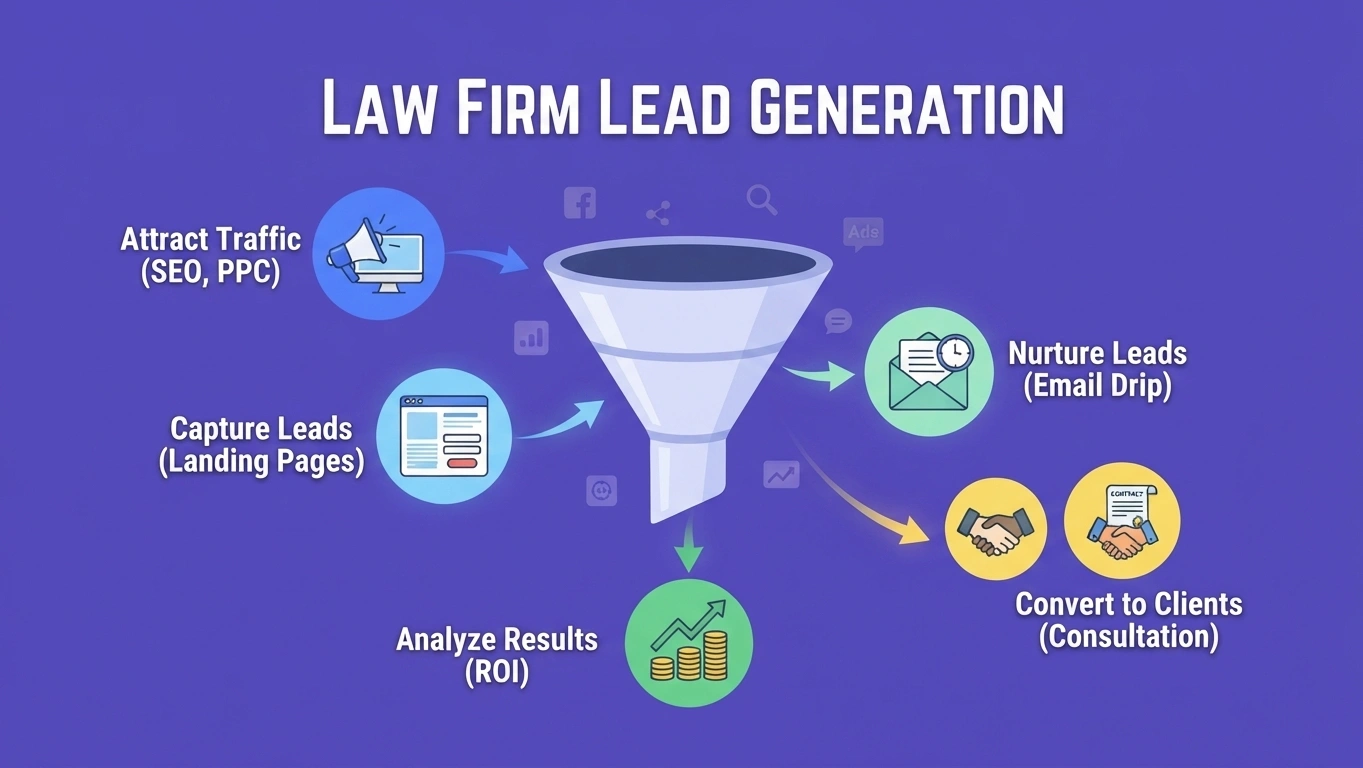
Before expanding a campaign, the firm should understand how many inquiries become qualified leads, how many qualified leads become consultations, and how many consultations become retained clients.
Starting with a controlled test can reduce unnecessary spending. Investment can then increase when the data shows that a channel is attracting suitable opportunities and the intake team can respond effectively.
Why Do Intake and Conversion Tracking Matter?
Marketing cannot compensate for an intake process that misses calls or responds too slowly.
The firm should record the original lead source, relevant campaign, practice area, location, qualification result, consultation status, and final outcome. Call tracking, forms, analytics platforms, and CRM software can support this process when configured appropriately.
Privacy and confidentiality should remain central. Firms should collect only necessary information and avoid exposing sensitive details through analytics or advertising platforms.
Clicks and impressions show activity. A better measurement process follows the prospect from initial source to qualified inquiry, consultation, and retained client.
How Can SEO and Paid Ads Work Together?
SEO and paid advertising do not need to compete for the entire marketing budget.
Paid campaigns can test search terms, service demand, headlines, and landing-page messaging. Those findings can then inform organic pages and content.
SEO can gradually build visibility around proven topics and reduce excessive dependence on paid clicks.
A firm might use advertising for a priority practice area while developing organic visibility in the background. Once SEO becomes more established, the firm can adjust paid spending or use it to support additional markets.
Both channels still depend on accurate content, focused landing pages, responsible claims, and effective intake.
How Do Referrals Strengthen Digital Marketing?
A referred prospect will often search for the firm online before making contact. They may review the website, attorney biographies, client feedback, practice-area pages, and Google Business Profile.
A poor online presence can weaken the confidence created by a referral. Outdated information, inconsistent contact details, or unclear services may cause the prospect to hesitate.
A strong digital presence reinforces professional recommendations by giving referred prospects a place to verify the firm’s attorneys, location, experience, and services.
Common Law Firm Lead Generation Mistakes
Law firms can waste time and money when they:
- Prioritize total lead volume over qualified cases
- Send paid traffic to generic or confusing pages
- Publish thin content created only for search engines
- Fail to track consultations and retained clients by source
- Respond slowly to calls and form submissions
- Depend entirely on one marketing channel
- Expand spending before fixing intake problems
- Make exaggerated or unverifiable advertising claims
- Ignore professional advertising and referral rules
Correcting these problems may improve results without increasing the marketing budget.
How Can a Law Firm Build a Balanced Strategy?
A balanced strategy begins with a clear definition of the firm’s ideal cases. The firm should identify supported practice areas, locations, case characteristics, and capacity before selecting channels.
Each channel should have a specific purpose. SEO may build long-term local and practice-area visibility. Paid advertising may support immediate demand for selected services. Referral development can strengthen relationships with professionals who regularly encounter relevant legal needs.
The firm should then establish consistent intake procedures and reporting.
Budgets should change according to meaningful outcomes rather than vanity metrics. A channel producing fewer inquiries may deserve more investment if those inquiries consistently match the firm’s case criteria.
Why Choose Click Typhoon for Law Firm Lead Generation?
Effective law firm lead generation requires more than isolated marketing tactics. Search visibility, advertising, website content, conversion paths, and performance reporting should all support the same business objectives.
Click Typhoon helps law firms develop coordinated strategies based on their services, markets, and growth priorities. Its approach connects local and organic search visibility with useful content, technical improvements, conversion planning, and measurable performance.
No ethical marketing provider can guarantee rankings, leads, or signed cases. Results depend on the market, competition, budget, website, intake process, and other factors.
Click Typhoon instead focuses on transparent strategy and ongoing optimization, helping firms understand how search visibility contributes to qualified inquiries and broader marketing performance.
Frequently Asked Questions
Is SEO or PPC better for law firms?
SEO may offer stronger long-term value, while PPC can provide faster visibility and greater short-term control. Many firms benefit from using both according to their goals, budget, and timeline.
How long does law firm SEO take to generate leads?
There is no guaranteed timeline. Competition, website condition, location, content quality, and existing authority all affect progress. Meaningful improvements often require sustained work rather than a brief campaign.
Are referrals better than online leads?
Referrals often arrive with greater trust, but they are not always the right fit. Online leads can be equally valuable when targeting, messaging, and intake screening are effective.
How much should a law firm spend on paid ads?
The budget should reflect competition, case economics, conversion rates, growth goals, and intake capacity. A controlled test is usually more informative than relying on a general industry average.
What makes a legal lead qualified?
A qualified lead generally has a legal need the firm handles, is located within an appropriate jurisdiction, meets the firm’s case criteria, and is prepared to discuss representation.
Can a law firm rely only on referrals?
Some firms grow primarily through referrals, but relying on one source creates risk. Referral volume can change when relationships, personnel, or market conditions change.
How should law firms track lead sources?
Firms can combine call tracking, website forms, analytics tools, intake questions, and CRM records. Tracking should continue through consultation and retention so the firm can measure more than initial inquiries.
Should a new firm start with SEO or paid ads?
A new firm may use paid ads for faster visibility while building an SEO foundation. The right starting point depends on budget, competition, practice area, website readiness, and the need for immediate inquiries.
Build a More Reliable Lead Generation Strategy
SEO, paid ads, and referrals each offer different advantages. SEO can support sustainable visibility, paid ads can create immediate exposure, and referrals can bring transferred trust.
The strongest strategy usually gives each channel a clear role and measures results based on qualified clients rather than raw lead volume.
If your firm needs a clearer strategy for attracting and converting the right prospects, explore Click Typhoon’s SEO services for personal injury lawyers and request a consultation.
Follow us on our socials here:
Check out some of our blogs to help with your SEO needs: