What Is Personal Injury Lawyer SEO and Why It Matters in 2026
When someone is injured in an accident, searching for legal information may be one of the first steps they take. They may ask what their claim could involve, whether they need an attorney, or which law firms serve their area.
For personal injury firms, appearing during these searches can create an important opportunity. However, simply publishing a website is not enough. Search engines must be able to understand the site, and prospective clients must be able to trust and use it.
Personal injury SEO brings these needs together. It helps a law firm improve visibility for relevant searches while creating a clearer path from a legal question to an appropriate service. In 2026, this may involve traditional search results, Google Maps, AI-powered search features, and other discovery experiences.
A strong strategy should consider legal accuracy, location, search intent, website performance, trust signals, conversions, and the quality of the inquiries a firm receives rather than rankings alone.
What Is Personal Injury SEO?
Personal injury SEO is the process of improving a law firm’s visibility when people search online for information or legal services related to accidents and injuries.
It may include keyword research, local SEO, practice-area content, technical improvements, internal links, reputation signals, and conversion tracking. Effective SEO for personal injury lawyers aims to connect a firm with people whose location, legal issue, and circumstances match the services it provides.
A strategy may target searches related to car accidents, truck collisions, premises liability, wrongful death, insurance claims, and other relevant practice areas. It can also help search engines understand where the firm operates and who is responsible for its legal content.
SEO does not guarantee rankings, calls, or signed cases. Its value comes from creating a stronger path between relevant searches, trustworthy information, and appropriate client inquiries.
How Is Personal Injury SEO Different From General SEO?
General SEO principles apply to most websites, but personal injury firms face additional challenges.
Personal injury law is highly competitive, especially in large cities. Firms may compete with local attorneys, regional practices, national brands, directories, paid advertisements, and lead-generation websites.
Legal services are also closely tied to geography and licensing. An attorney must be authorized to practice in the relevant jurisdiction, and the location of an accident may affect applicable laws, deadlines, and courts.
The content itself requires additional care because readers may use it to make important decisions about their legal rights and finances. Generic articles written only to rank can create confusion or reduce trust.
A successful strategy therefore needs to combine standard optimization with legal accuracy, ethical advertising, local relevance, and careful measurement of lead quality.
Why Does Personal Injury SEO Matter in 2026?
Search results continue to evolve. People may encounter a law firm through a standard organic listing, Google Business Profile, map result, video, or AI-powered search feature.
This does not mean traditional SEO has become irrelevant. It means websites need to be clear, useful, technically accessible, and trustworthy across more search experiences.
A potential client may begin with a broad question about insurance, fault, or filing deadlines. Later searches may become more specific, such as looking for an attorney in a particular city. A well-planned website can support that journey through educational resources, practice-area pages, local content, attorney profiles, and clear contact options.
The fundamentals still matter: answer real questions, demonstrate genuine knowledge, maintain accurate business information, and make important content accessible to both readers and search engines.
How Do AI Overviews and AI Mode Affect Legal SEO?
Google Search includes AI-powered features that can present summaries and supporting links for certain searches. These features may change how people explore legal questions, but they do not require law firms to abandon established SEO practices.
According to Google Search Central’s guidance on AI features, the same foundational SEO practices used for traditional search remain relevant to AI Overviews and AI Mode. Google states that no additional technical requirements or special structured data are needed specifically for these features.
A page must still be indexed and eligible to appear in Google Search before it can be considered as a supporting link. Google also recommends helpful content, internal links, a good page experience, accessible text, accurate structured data, and current Business Profile information.
For law firms, this reinforces the value of answering questions clearly and supporting important statements with reliable information. A page should provide legal context and practical explanation rather than trying to imitate an AI-generated response.
What Does Search Intent Mean for Personal Injury Firms?
Search intent describes what someone is trying to accomplish with a search.
A person asking what to do after a collision may need basic guidance. Someone searching for a truck accident lawyer in a particular city may be closer to contacting an attorney. Another person may search for a law firm by name after receiving a referral.
These searches should not all lead to the same generic page. Informational articles can answer early questions, practice-area pages can explain the cases a firm accepts, location pages can establish geographic relevance, and attorney biographies can introduce the professionals behind the firm.
SEO should connect each search intention with an appropriate page and logical next step.
Why Is Local SEO Important for Personal Injury Attorneys?
Personal injury representation is often location-specific. Potential clients may prefer an attorney who is accessible and familiar with the laws, courts, and procedures in their area.
Local SEO helps search engines and prospective clients understand where a firm operates. It may involve a verified Google Business Profile, accurate contact information, authentic reviews, trusted directory listings, and useful location pages.
Location pages should provide more than a city name inserted into reused copy. They should explain the services available in that area and include genuinely relevant local information when appropriate.
Accurate local targeting can also improve lead quality by reducing inquiries from jurisdictions where the firm cannot provide representation.
What Content Supports a Personal Injury SEO Strategy?
A useful personal injury website should answer the questions prospective clients actually ask.
Practice-area pages can explain the types of accidents and claims a firm handles. Educational articles may address evidence, insurance adjusters, medical records, filing deadlines, attorney fees, settlements, and the claims process.
Content should be written in plain language while remaining legally accurate. It should educate readers without promising a result or attempting to replace advice based on their specific circumstances.
Original insight is especially valuable. Attorneys can contribute explanations based on common client concerns, jurisdiction-specific procedures, and issues that frequently create confusion.
Content should also be reviewed and updated when laws, procedures, or firm information change.
How Does E-E-A-T Apply to Personal Injury Content?
E-E-A-T refers to experience, expertise, authoritativeness, and trustworthiness. It provides a useful framework for evaluating whether legal content gives readers enough reason to trust the information and organization publishing it.
Attorney biographies should accurately describe education, licensing, admissions, experience, and relevant practice areas. Legal articles should identify the author or reviewer when appropriate. Sources, update dates, disclaimers, and contact information can further support transparency.
Trust is weakened by fabricated credentials, unsupported superlatives, copied content, or guaranteed outcomes. Case results and testimonials should also be presented carefully because previous outcomes do not guarantee future results.
SEO cannot create genuine authority through keywords alone.
What Technical SEO Does a Personal Injury Website Need?
Technical SEO helps search engines access, understand, and index a website while also supporting a smoother user experience.
A law firm website should work well on mobile devices, load efficiently, use logical navigation, and connect related pages through internal links. Important pages should have descriptive titles, clear headings, readable text, and a distinct purpose.
Broken links, accidental noindex tags, poor redirects, duplicate content, and conflicting canonical tags can prevent useful pages from appearing as intended.
Structured data may help search engines understand information about the organization, attorneys, breadcrumbs, and other eligible content. Any markup should accurately reflect what visitors can see on the page.
How Can Personal Injury SEO Generate Better Leads?
More traffic does not automatically mean more suitable cases. A website may attract visitors who live outside the service area, need another type of attorney, or are researching a general topic.
Better targeting begins with understanding which cases the firm wants and is qualified to handle. Keyword research, practice-area pages, and local content can then focus on those needs.
Conversion design matters as well. Phone numbers should be easy to find, mobile visitors should be able to call conveniently, and contact forms should be simple without requesting unnecessary sensitive information.
The intake team should also record where inquiries come from and whether they meet the firm’s qualification criteria. That feedback helps the SEO strategy focus on pages and searches that generate relevant opportunities.
How Should Law Firms Measure SEO Performance in 2026?
Rankings and traffic can indicate whether visibility is improving, but they do not show the full business impact.
A useful measurement plan may track:
- Organic impressions and clicks
- Google Business Profile actions
- Calls and contact-form submissions
- Qualified inquiries
- Consultations scheduled
- Signed cases
- Cost per qualified lead
- Results by location, practice area, and landing page
Google states that traffic from AI Overviews and AI Mode is included within Search Console’s Web search reporting. Firms can combine this information with analytics, call tracking, and intake data to understand what happens after someone reaches the website.
Intake feedback remains important. A page with less traffic may still be more valuable if it consistently produces suitable cases.
Is SEO Better Than Paid Advertising?
SEO and paid advertising serve different purposes.
Paid advertising can create visibility quickly and target selected searches and locations, but that exposure usually stops when the advertising budget is paused.
SEO generally takes longer because content, technical improvements, and local authority develop over time. Its potential advantage is that established pages may continue attracting organic visitors without paying for every click.
Many firms use both. Paid search can support immediate demand or priority practice areas, while SEO builds a longer-term digital presence.
Both channels should ultimately be evaluated by qualified leads and appropriate cases rather than clicks alone.
What Ethical Issues Apply to Personal Injury SEO?
Legal SEO must comply with applicable professional advertising rules and broader standards for truthful marketing.
The Federal Trade Commission’s advertising guidance states that marketing claims must be truthful, evidence-based, and cannot be deceptive or unfair. State bar rules and other professional requirements may impose additional obligations.
Law firms should be careful when using testimonials, reviews, awards, comparisons, fee claims, and case results. They must also protect client confidentiality when responding to reviews or discussing previous matters.
Marketing content should never guarantee a result, misrepresent attorney experience, or create false urgency.
What Personal Injury SEO Mistakes Should Firms Avoid?
Common mistakes include:
- Targeting traffic without considering case quality
- Creating duplicate pages for numerous cities
- Using fake office locations
- Publishing legal content without attorney review
- Buying links, reviews, or fabricated testimonials
- Making unsupported claims about outcomes
- Ignoring mobile website performance
- Treating every call as a qualified lead
- Assuming AI search requires abandoning SEO fundamentals
Avoiding these shortcuts helps protect the firm’s visibility, reputation, and credibility.
Why Choose Click Typhoon for Personal Injury SEO?
Click Typhoon provides SEO services designed around the needs of personal injury law firms. Its approach includes local SEO, practice-area content, technical optimization, conversion improvements, and performance tracking.
This coordinated strategy matters because results rarely depend on a single change. A website may need stronger content, better local signals, improved mobile performance, clearer contact options, or more accurate measurement.
Click Typhoon also emphasizes data-driven decisions, transparent communication, and return on investment. A meaningful campaign should connect search visibility with qualified inquiries, consultations, and appropriate case opportunities rather than reporting rankings without context.
Law firms can explore Click Typhoon’s SEO services for personal injury lawyers and request a free SEO audit to identify content, technical, local, and conversion opportunities.
Frequently Asked Questions
What is personal injury SEO in simple terms?
Personal injury SEO helps a law firm become more visible when people search online for information or attorneys related to accidents and injuries. It combines content, local optimization, technical improvements, authority signals, and conversion tracking.
How long does personal injury lawyer SEO take?
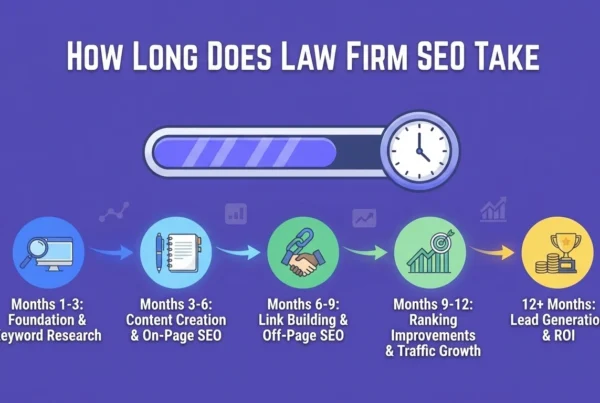
There is no universal timeline. Competition, website history, technical condition, content quality, local reputation, and target market can all influence progress. SEO should be treated as an ongoing strategy rather than a guaranteed short-term result.
Does a personal injury law firm need local SEO?
Most personal injury firms benefit from local SEO because they serve specific jurisdictions and geographic markets. Local optimization helps nearby prospective clients understand where the firm operates and which services it provides.
Can personal injury content appear in AI Overviews?
A page may be considered as a supporting link when it is indexed, eligible for Google Search, and relevant to the query. Inclusion is not guaranteed.
Does a website need special AI markup in 2026?
Google states that websites do not need special AI schema, machine-readable AI files, or additional technical requirements to appear in its AI search features. Standard SEO best practices still apply.
Is SEO better than paid advertising for personal injury lawyers?
Neither channel is universally better. Paid advertising may create faster visibility, while SEO may build longer-term organic visibility. Many firms use both and compare qualified lead and case results.
Build a Stronger Search Presence in 2026
Personal injury SEO helps connect people searching for legal information with law firms capable of assisting them. In 2026, that connection may happen through traditional listings, local results, maps, or AI-powered search experiences.
The fundamentals remain important. Law firms need accurate content, legitimate local relevance, a technically sound website, transparent trust signals, and a contact process that works.
If your firm wants to identify gaps in its search visibility and lead-generation process, request a free SEO audit from Click Typhoon. A focused strategy can help turn relevant searches into more meaningful opportunities.
Follow us on our socials here:
Check out some of our blogs to help with your SEO needs: