Law Firm Content Marketing: How to Build Trust Before the First Call
Most prospective clients do not call a law firm the moment they see its name. They often visit the website, read attorney biographies, review practice-area pages, look for answers to legal questions, and compare the firm with other options.
That research period creates an opportunity. Helpful content can answer early questions, demonstrate relevant knowledge, and show prospective clients what they can expect from the firm.
Law firm content marketing should do more than attract website traffic. It should help the right readers understand a legal issue, evaluate the firm’s services, and decide whether requesting a consultation is an appropriate next step.
Trust is especially important in legal marketing because people may be dealing with injuries, financial concerns, business problems, family disputes, or other high-stakes situations. Content should therefore be accurate, transparent, useful, and reviewed by qualified professionals.
What Is Law Firm Content Marketing?
Law firm content marketing is the process of creating and distributing useful information for prospective clients, referral sources, and the communities a firm serves.
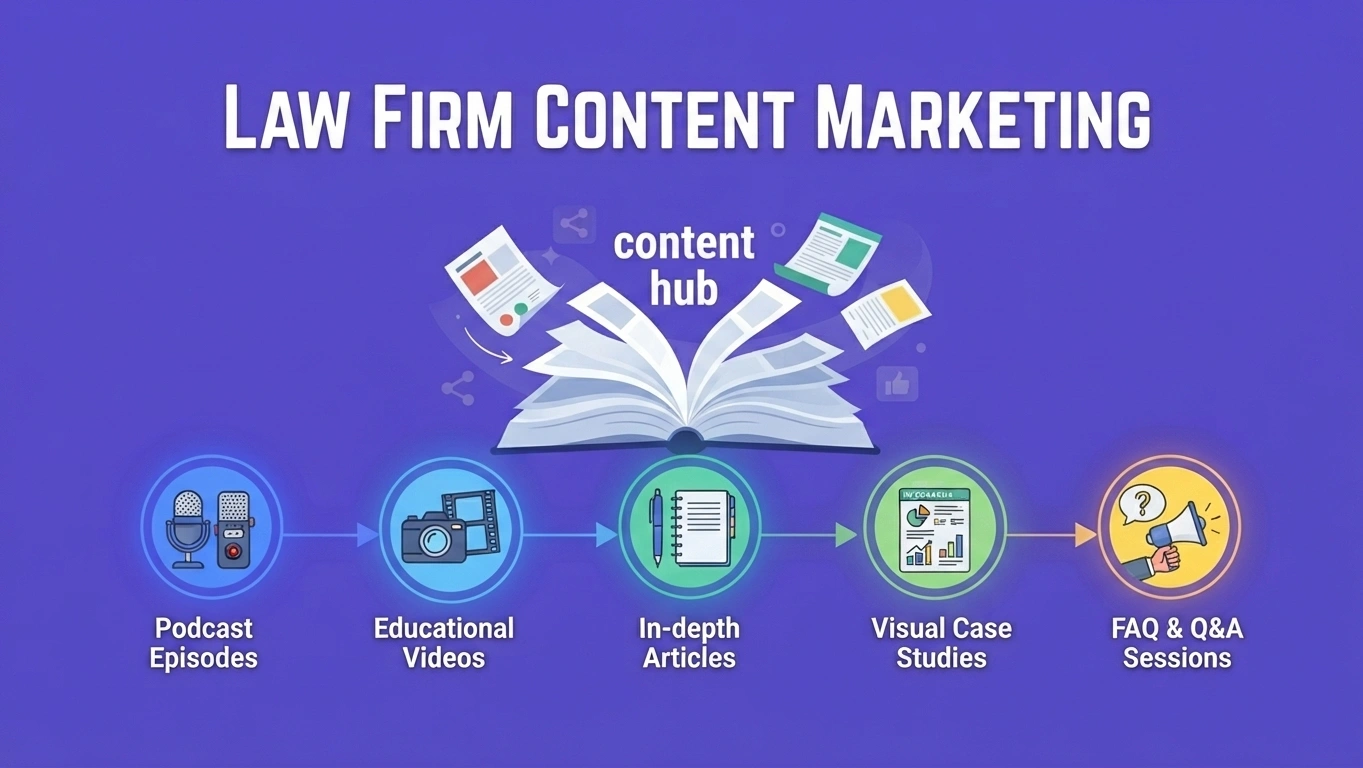
Content may include practice-area pages, educational articles, attorney biographies, FAQs, videos, newsletters, local resources, and explanations of legal processes.
Unlike direct advertising, content marketing usually begins by answering a question or helping someone understand a problem. It can build trust by showing how clearly and responsibly the firm communicates before a consultation occurs.
Effective legal content identifies who created or reviewed the information, uses reliable sources, avoids unsupported promises, and explains when individual legal advice may be necessary. It can also support search visibility by addressing the questions people ask online.
However, traffic alone does not demonstrate success. Law firms should evaluate whether their content contributes to qualified inquiries, consultations, referrals, and suitable cases.
Why Does Trust Matter Before the First Call?
Hiring an attorney can feel intimidating. A prospective client may not understand the legal process, how fees work, what information to prepare, or whether the firm handles the type of problem involved.
The website often provides the first detailed experience with the firm. Confusing explanations, vague attorney profiles, aggressive sales language, or unsupported claims may discourage someone from making contact.
Clear content can reduce that uncertainty. It can explain what the firm does, who handles the work, where services are available, and what may happen after someone calls.
Content cannot establish trust by itself, nor should a general article attempt to create an attorney-client relationship. Its role is to give readers enough reliable information to make a more informed decision about the next step.
Start With the Questions Prospective Clients Ask
A useful content strategy begins with real questions rather than an arbitrary publishing schedule.
Intake staff, attorneys, receptionists, and other client-facing team members can identify concerns that arise repeatedly. These may involve deadlines, fees, documentation, insurance, evidence, communication, or the steps in a legal process.
Search data can reveal additional topics, but search volume should not be the only factor. A question asked by fewer people may still be valuable if it closely relates to an important practice area.
Some questions cannot be answered responsibly without reviewing the specific facts. In those situations, content can explain the general considerations and why individual legal advice may be necessary.
This approach helps the firm publish information grounded in actual client needs instead of generic topics that could appear on any legal website.
Build Content Around the Client Journey
Prospective clients need different information at different stages.
Someone in the early research stage may want to understand basic legal terms or immediate next steps. A person comparing attorneys may focus on experience, location, communication, fees, and the consultation process. Someone ready to contact a firm may simply need a phone number, appointment information, or a short inquiry form.
Content should connect these stages naturally. An educational article can link to a relevant practice-area page, which can introduce the attorneys who handle those matters and provide a clear consultation option.
Internal links should be genuinely useful. They should not force every reader toward a sales page before answering the original question.
Create Strong Practice-Area Pages
Practice-area pages explain the services a firm provides. They should be more detailed than a simple list of legal topics.
A useful page may describe common situations, the general legal process, evidence that could be relevant, and factors that may affect a claim. It should identify the jurisdictions and communities the firm serves without suggesting that the information applies everywhere.
The page can introduce relevant attorneys, link to educational resources, and explain how to request a consultation. Claims about experience, case results, and credentials must be accurate.
Practice-area pages should not predict what a case is worth or guarantee a result. Every matter depends on its facts, applicable law, evidence, and other circumstances.
Publish Helpful Educational Articles
Educational articles can help prospective clients understand unfamiliar legal issues before they contact the firm.
Each article should answer a focused question clearly and provide enough context to help the reader move forward without repeating the same vague information found across many other websites.
Google’s guidance on helpful, reliable, people-first content encourages original information, clear sourcing, demonstrated expertise, and content created primarily to benefit readers.
For a law firm, this may mean including practical insight from attorneys, explaining jurisdictional limitations, linking to authoritative sources, and identifying when the article was reviewed.
Content should also avoid presenting general information as advice for a specific person. A short disclaimer can clarify the article’s educational purpose.
Use Attorney Biographies to Establish Credibility
Attorney biographies are often among the most important trust-building pages on a law firm website.
A biography should accurately describe education, licensing, admissions, practice focus, professional experience, and relevant roles. It can also explain how the attorney approaches communication or why a particular area of law matters to them.
Personal details may help prospective clients feel more comfortable, but biographies should remain professional and verifiable. Inflated titles, vague superlatives, and fabricated credentials weaken trust.
Attorney pages can also link to relevant practice areas and articles the attorney wrote or reviewed. These connections help readers understand the person behind the legal information.
Demonstrate E-E-A-T Through Editorial Practices
E-E-A-T refers to experience, expertise, authoritativeness, and trustworthiness. It offers a useful framework for evaluating legal content.
Important pages should identify the author or legal reviewer when appropriate. Bylines can link to biographies that explain the person’s background. Sources should support factual statements, and update dates should reflect meaningful reviews rather than cosmetic changes.
The firm should also have a process for correcting errors and reviewing older content. Laws, procedures, and firm information can change over time.
SEO for personal injury lawyers also benefits from these trust signals because readers and search engines need to understand who is responsible for high-stakes legal information.
Use Case Examples and Results Carefully
Case examples can make an unfamiliar legal process easier to understand, but they must be used carefully.
The firm should protect confidential information and obtain appropriate permission before identifying a client. An anonymized or composite example should be labeled accurately so readers are not misled.
Case results also require context. A large result from one matter does not predict the outcome of another. Differences in liability, damages, insurance, evidence, and jurisdiction may lead to very different results.
Disclaimers should be clear, and every example should comply with the professional advertising rules that apply to the firm.
Add Video and Visual Content When Helpful
Some legal topics are easier to understand through video, diagrams, or short visual guides.
An attorney video can introduce the firm, explain a practice area, or answer a common question. A written transcript improves accessibility and gives visitors another way to use the information.
Charts or process graphics may help explain a sequence of events, but they should not oversimplify legal issues. Sensational accident images and fear-based visuals may undermine the professional tone.
Every visual should have a clear purpose. Decoration alone does not build trust.
Connect Content Marketing With SEO
Content marketing and SEO serve different but connected purposes. SEO helps useful content become discoverable, while the content itself helps readers evaluate the firm.
Keyword research can identify the language prospective clients use. Search intent can help determine whether a topic needs an article, practice-area page, location page, or FAQ.
Technical accessibility, descriptive titles, internal links, and mobile usability also affect whether readers and search engines can use the content.
SEO should never turn legal articles into keyword-heavy sales pages. The primary goal should remain answering the reader’s question accurately and clearly. Firms can learn more through Click Typhoon’s SEO services for personal injury lawyers.
Create Local Content Without Thin City Pages
Local content can help readers understand where the firm practices and whether it serves their area.
A useful location page may include office information, services available in that market, relevant attorneys, directions, and genuinely helpful local resources. Articles may address jurisdiction-specific procedures or local questions when qualified attorneys can review the information.
The firm should avoid publishing dozens of pages that repeat the same content with different city names. These pages provide little value and may misrepresent the firm’s connection to a location.
Local content should be created because people in that community need the information, not simply because a city name appears in keyword research.
Make the Next Step Clear but Not Pushy
Content should answer the reader’s question before asking them to make contact.
A relevant call to action may invite the reader to request a consultation, call the office, or learn more about a related practice area. Phone numbers should be visible, and contact forms should remain simple.
The website can explain what happens after an inquiry, such as whether the firm conducts an initial screening or schedules a consultation.
It should also clarify that submitting a form or leaving a message does not automatically establish an attorney-client relationship.
Aggressive pop-ups, artificial countdowns, and fear-based messages can weaken the trust the content is intended to build.
Distribute and Maintain the Content
Publishing an article is only the beginning. Useful content may be shared through email newsletters, social channels, professional profiles, referral networks, and community resources.
A detailed article can also support a short video or social post, provided each version adds value and accurately represents the original information.
Existing pages should be reviewed for outdated laws, broken links, incorrect attorney information, and changed office details. Update dates should change only when a meaningful review or revision occurs.
Maintaining accurate content may provide more value than continuously publishing new articles while older pages become unreliable.
Measure Whether Content Builds Trust
Traffic is useful, but it does not reveal whether content supports business goals.
A law firm may review organic visibility, engaged visits, internal-link use, calls, forms, consultations, and qualified leads. Performance can be compared by topic, practice area, location, and stage of the client journey.
Intake staff can also ask how prospective clients found the firm and whether they read a particular resource. This feedback may reveal that an article influenced a consultation even when it was not the person’s final landing page.
The firm should evaluate quality as well as volume. A page attracting fewer visitors may still be valuable if those readers closely match the firm’s services.
Common Content Marketing Mistakes
Law firms should avoid mistakes such as:
- Writing only for search engines
- Publishing legally inaccurate information
- Creating generic or duplicate articles
- Hiding authorship and legal review
- Making unsupported claims or guarantees
- Using confidential client details
- Publishing without a defined audience
- Adding aggressive calls to action
- Neglecting older pages
A clear editorial process can prevent many of these problems.
Follow Ethical and Advertising Requirements
Legal content marketing may involve testimonials, endorsements, case results, reviews, attorney credentials, fee statements, and confidential information.
The Federal Trade Commission’s advertising guidance states that marketing claims must be truthful, evidence-based, and neither deceptive nor unfair.
Law firms must also follow applicable attorney advertising and professional conduct rules. Requirements may vary by jurisdiction and content type.
An outside writer or marketing agency can help create content, but attorneys should retain appropriate review and approval responsibility. General marketing guidance does not replace jurisdiction-specific legal and ethical review.
Why Choose Click Typhoon for Law Firm Content Marketing?
Click Typhoon provides SEO services designed for personal injury law firms. Its approach includes practice-area content, local SEO, technical optimization, conversion improvements, and performance tracking.
These services can support a coordinated content strategy. Search research helps identify relevant client questions. Practice-area content explains the firm’s services. Technical improvements make pages easier to access, while performance tracking connects visibility with inquiries.
Click Typhoon also emphasizes transparency, communication, data-driven decisions, and return on investment. These principles support content that serves both readers and measurable business goals.
Law firms can request a free SEO audit to identify opportunities involving content quality, search visibility, internal linking, local relevance, and conversion.
Frequently Asked Questions
What is law firm content marketing?
Law firm content marketing involves creating useful information for prospective clients and referral sources. It may include articles, practice-area pages, attorney biographies, videos, FAQs, newsletters, and local resources.
What types of content should a law firm publish?
The right mix depends on the firm’s services and audience. Useful options include detailed practice-area pages, answers to common questions, attorney profiles, process explanations, videos, and local legal resources.
How often should a law firm publish content?
There is no ideal frequency. The firm should prioritize accuracy, usefulness, professional review, and maintenance over publishing as often as possible.
Can law firms use client stories?
They may be able to use client stories with appropriate permission, confidentiality safeguards, accurate context, and compliance with applicable professional rules. Previous outcomes should never be presented as guarantees.
How does content marketing support SEO?
Content can target relevant questions, explain services, strengthen internal linking, and demonstrate expertise. SEO helps that content become discoverable through organic search.
How long does legal content marketing take to work?
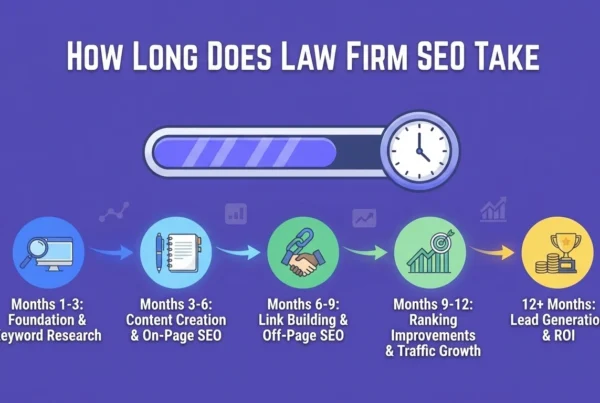
There is no guaranteed timeline. Results depend on competition, website history, content quality, technical condition, distribution, local relevance, and the firm’s broader reputation.
Build Trust One Helpful Answer at a Time
Law firm content marketing works best when it begins with a real client question and ends with a clear, accurate answer.
Strong content identifies who created or reviewed it, provides appropriate context, and avoids promises that cannot be supported. It should also connect naturally with relevant legal services and a respectful invitation to request a consultation.
To evaluate your firm’s content and organic visibility, contact Click Typhoon for a free SEO audit and a strategy discussion focused on qualified leads.
Follow us on our socials here:
Check out some of our blogs to help with your SEO needs: