Local SEO for Lawyers: The Complete Guide to Ranking in the Map Pack
When someone needs an attorney, location often matters. A person may search for a lawyer in a particular city, look for a nearby office, or use Google Maps to compare firms before making a call.
The map pack can place selected local businesses prominently within search results. It may show business names, reviews, addresses, hours, phone numbers, and directions before many traditional organic listings. That visibility can be valuable for firms serving specific communities.
However, map-pack rankings cannot be purchased or guaranteed. They depend on factors such as how relevant a firm is to the search, how far it is from the searcher, and how prominent it appears.
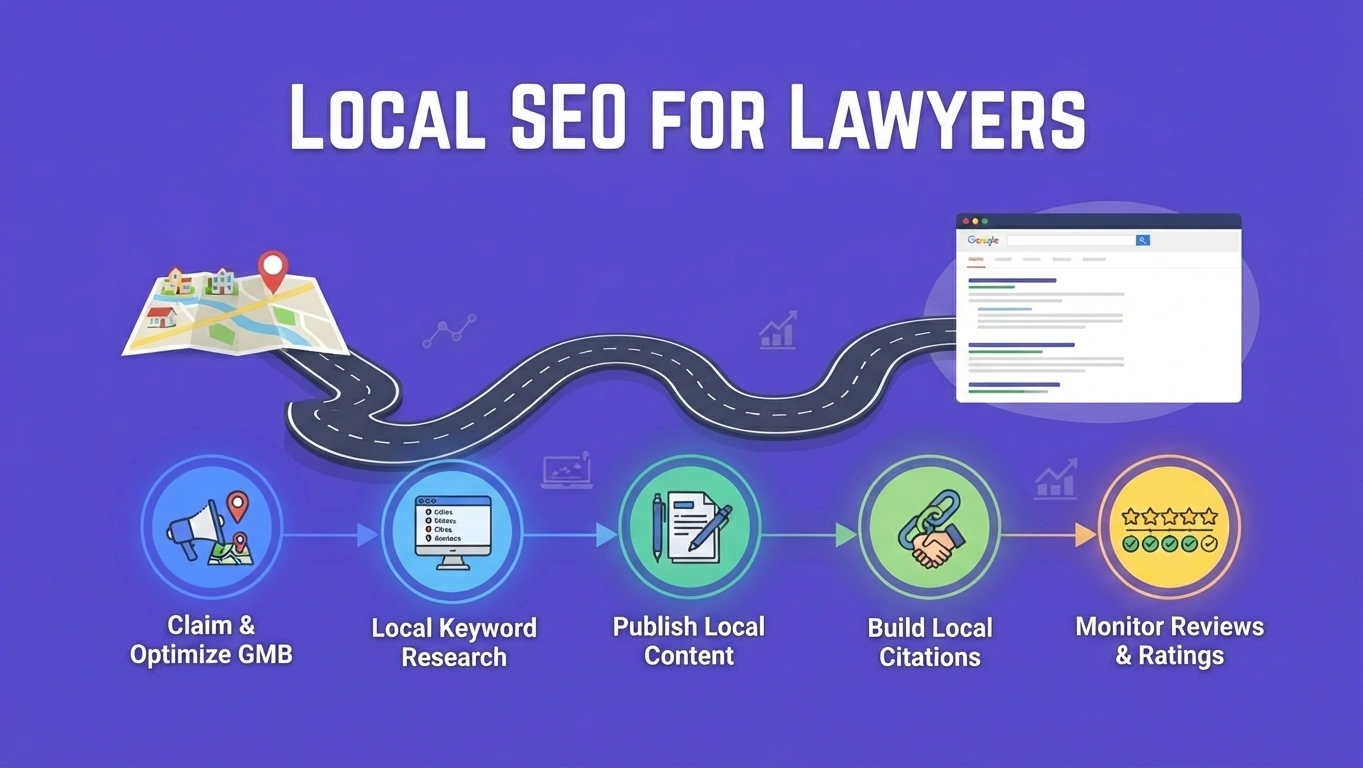
Effective local SEO for lawyers combines an accurate Google Business Profile with useful website content, legitimate office information, authentic reviews, consistent listings, and a clear contact process. The goal should not be rankings alone. Local visibility becomes valuable when it produces inquiries from people whose needs and locations match the firm’s services.
What Is Local SEO for Lawyers?
Local SEO for lawyers is the process of improving a law firm’s visibility for searches connected to a particular geographic area. It may help a firm appear in Google Maps, the local map pack, and location-based organic search results.
A local strategy commonly includes an accurate Google Business Profile, consistent contact information, useful location and practice-area pages, authentic reviews, reputable local listings, and relevant links. The firm’s website should also explain where it operates, which services it provides, and which attorneys work there.
Local SEO cannot guarantee a map-pack position because results may change based on the searcher’s location, query, device, competition, and other factors.
A strong campaign should therefore measure more than rankings. Calls, contact forms, qualified inquiries, consultations, and appropriate cases provide a clearer picture of whether local visibility is helping the firm reach suitable prospective clients.
What Is the Google Map Pack?
The map pack is a group of local business results that may appear in Google Search when a query has local intent. A map usually accompanies these results.
Someone searching for a nearby attorney may see the firm’s name, rating, review count, address, hours, phone number, website, and directions. The exact information shown can vary.
Map-pack results are different from traditional organic listings. A law firm can appear in both areas, giving it more than one opportunity to be discovered. Paid advertisements may also appear nearby, but paying for an ad does not purchase a higher organic map ranking.
Results can also differ from one person to another. A firm that appears prominently near its office may not hold the same position for someone searching from another neighborhood.
How Does Google Rank Law Firms in Local Results?
Google explains that local results are mainly based on relevance, distance, and prominence.
Relevance describes how closely the Business Profile matches the person’s search. Accurate categories, services, and business information help Google understand the firm.
Distance considers how far the business is from the searcher or the location named in the query. A law firm cannot make a legitimate office physically closer to every prospective client.
Prominence reflects how well known the business appears to be. Google may consider information available across the web, including links, articles, directories, and reviews.
According to Google’s local ranking guidance, businesses cannot request or pay for better local organic rankings. Firms should be cautious when an agency guarantees map-pack placement.
Confirm That the Law Firm Is Eligible
Before creating or optimizing a profile, the firm should confirm that the location satisfies Google’s requirements.
A law office generally needs a legitimate presence that meets the platform’s eligibility rules. Addresses used only to receive mail or create additional rankings may not qualify. Virtual offices and shared spaces require careful review because eligibility can depend on factors such as signage, staffing, and whether clients can visit during stated hours.
The address, hours, and contact details should reflect how the office actually operates. Creating profiles for markets where the firm has no qualifying presence may result in suspensions, removed listings, or confusion for prospective clients.
Eligibility rules can change, so firms should review current documentation before creating additional profiles.
Complete and Verify the Google Business Profile
A complete Business Profile helps potential clients understand what the law firm does and how to contact it.
The profile should include the firm’s genuine public name, correct address, phone number, website, business hours, and relevant categories. The firm should also complete Google’s verification process.
Information must remain current. If the firm moves, changes its hours, or updates its phone number, both the profile and website should be corrected promptly.
The website link should lead to the most relevant page. A single-location firm may use its homepage, while a multi-office firm may benefit from linking each eligible profile to the corresponding office page.
Use an Accurate Business Name and Categories
The Business Profile name should match the firm’s real-world public name. Adding a city, practice area, or promotional phrase that is not part of the genuine name may violate Google’s guidelines.
For example, a firm should not add “Best Car Accident Lawyer” to its listing simply to target keywords unless that phrase is genuinely part of its recognized business name.
The primary category should describe the firm as accurately as possible. Appropriate secondary categories may provide additional context, but selecting every available legal category can dilute the profile’s focus.
Categories should reflect services the firm actually provides rather than every service it hopes to rank for.
Handle Individual Lawyers and Multiple Offices Carefully
Law firms may have profiles for the organization, individual attorneys, or multiple offices. These arrangements require careful management.
Public-facing attorneys may be eligible for practitioner profiles in certain circumstances. However, duplicate or poorly differentiated profiles can compete with one another, display conflicting details, or confuse clients.
Each office profile should represent a legitimate qualifying location with accurate contact information, hours, and website links.
Google’s guidelines for representing a business provide current requirements for names, addresses, service areas, departments, practitioners, and other profile elements. Firms should review these guidelines before making structural changes.
Optimize the Website for Local Search
The Business Profile and website should support one another.
The website should clearly display the firm’s contact information, office locations, attorneys, services, and areas served. Each office page should include accurate details and provide a useful reason for the page to exist.
Descriptive titles and headings can help search engines understand each page. Internal links should connect office pages with relevant practice areas and attorney biographies.
The website should also work properly on smartphones. Someone searching after an accident may need to call quickly, so slow pages, unreadable text, or difficult forms can waste local visibility.
Create Useful Location and Practice-Area Pages
Location pages can support local SEO when they contain original and helpful information.
A useful page may explain which services are available in the area, which office serves the community, how to contact the firm, and which attorneys handle relevant cases. Directions, office photos, nearby landmarks, and legitimate local resources may also help visitors.
The page should not simply repeat the same text with a different city name. Creating dozens of interchangeable pages can provide a poor experience and make the firm’s actual service areas unclear.
Practice-area pages should also be specific. They can explain the types of matters handled, the general claims process, common questions, and how to request an evaluation. SEO for personal injury lawyers is more effective when service and location relevance are connected naturally.
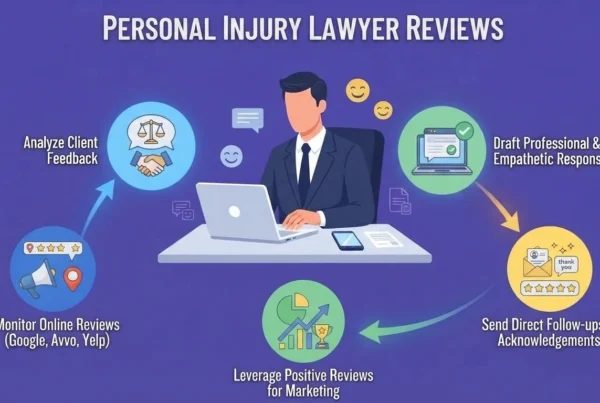
Build an Ethical Review Strategy
Reviews can help prospective clients evaluate communication, professionalism, and the overall experience of working with a firm. Google also states that review quantity and positive ratings may contribute to local prominence.
Firms can request honest feedback through a consistent process. They should not buy reviews, create fake testimonials, offer improper incentives, or intentionally filter out negative feedback.
Responses must protect confidentiality. Even confirming that someone was a client could disclose information the firm should not discuss publicly. Replies should remain brief, professional, and general.
Reviews should support trust rather than serve as a shortcut for manipulating rankings.
Maintain Accurate Business Listings
Law firms may appear in bar association directories, legal websites, business directories, local organizations, and other online resources.
The firm’s name, address, phone number, and website should remain accurate across important listings. Old addresses, duplicate profiles, and disconnected phone numbers can confuse both clients and search platforms.
The objective is not to submit the firm to as many directories as possible. Relevant and reputable listings are more useful than hundreds of low-quality entries.
A regular citation audit can identify outdated information and duplicate profiles.
Earn Relevant Local Recognition
Prominence is not built through the Business Profile alone. Mentions and links from reputable websites may reinforce the firm’s relationship with its profession and community.
Potential sources include professional organizations, local media, community groups, legal publications, educational institutions, and genuine partnerships. A firm may also earn recognition by publishing useful research, providing legal education, or participating in community programs.
These activities should be legitimate. Buying unrelated links or joining private link networks can create risk and does not build meaningful authority.
Use Photos and Profile Features Appropriately
Accurate photos can help prospective clients recognize the office and become familiar with the attorneys or team. Useful images may include the building exterior, entrance, reception area, and professional team photographs.
Hours, appointment information, accessibility details, and other applicable profile features should remain current.
However, frequently uploading photos or posts does not guarantee stronger rankings. Accuracy and usefulness are more important than activity for its own sake.
Every image and update should represent the real firm and avoid disclosing client information.
Connect Local SEO With Broader Organic Search
Map-pack visibility is only one part of the search experience. A prospective client may move from the Business Profile to the website before calling.
The website should support that transition with relevant practice-area content, local pages, attorney biographies, reviews, and clear consultation options. Educational articles can answer early questions, while service pages explain how the firm may help.
A broader SEO strategy can connect local discovery with traditional organic visibility. A firm may appear in maps for nearby searches while its educational or practice-area pages appear in standard results.
Neither ranking creates value on its own. The website and intake process must help suitable prospective clients take the next step.
Track Map-Pack Performance and Lead Quality
Local SEO reporting may include Business Profile views, website visits, calls, directions, reviews, and local ranking observations.
Rank tracking must be interpreted carefully because distance affects results. A firm may rank differently a few blocks away, across town, or in another city. A single manual search is not a reliable measure of overall visibility.
More importantly, the firm should connect local activity with intake results. Calls and forms should be categorized by location, practice area, qualification status, consultation outcome, and source when possible.
A campaign that improves map rankings but produces irrelevant calls needs further adjustment. Qualified inquiries and suitable cases provide more useful information than profile activity alone.
Common Local SEO Mistakes
Law firms should avoid problems such as:
- Using fake or ineligible office locations
- Adding keywords to the Business Profile name
- Selecting inaccurate categories
- Creating duplicate or conflicting attorney profiles
- Publishing interchangeable city pages
- Buying reviews or manipulative links
- Leaving outdated contact information online
- Measuring rankings without lead quality
- Expecting guaranteed map-pack placement
These tactics may create short-term changes, but they can weaken trust and expose the profile to enforcement action.
What Should a Firm Do After a Profile Suspension?
A suspension should be handled carefully. Creating an immediate replacement profile may produce duplicates and make the situation more difficult.
The firm should review its name, address, categories, office eligibility, website, and supporting documents against Google’s current guidelines. Inaccurate information should be corrected before an appeal is submitted.
Google may request documents showing that the firm operates at the stated location. The firm should follow the official appeal process and provide accurate evidence.
Repeated edits, duplicate submissions, or contradictory information can delay resolution. An experienced professional may help organize the issue, but no provider can guarantee reinstatement.
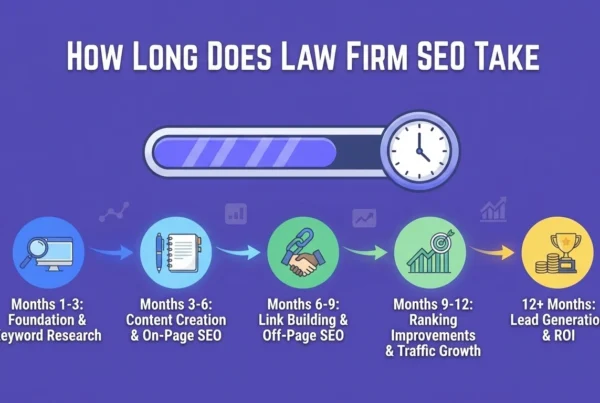
How Long Does Local SEO Take?
There is no universal timeline for reaching the map pack.
Progress may depend on proximity, competition, profile history, website quality, content, reviews, links, and broader local prominence. A new office in a competitive city may face different challenges from an established firm in a smaller market.
An agency can provide a schedule for audits, corrections, content, and profile improvements. It cannot promise the exact date or location from which a particular ranking will appear.
Local SEO should be treated as ongoing work that requires monitoring and maintenance.
Why Choose Click Typhoon for Local Lawyer SEO?
Click Typhoon provides SEO services designed for personal injury law firms. Its approach includes local optimization, practice-area content, technical SEO, conversion improvements, and performance tracking.
This combined strategy matters because a Business Profile cannot compensate for an inaccurate or unhelpful website. Local visibility should connect with relevant content, credible firm information, and a clear contact experience.
Click Typhoon also emphasizes transparency, communication, data-driven decisions, and return on investment. These principles support an SEO campaign focused on meaningful inquiries rather than map rankings alone.
Law firms can explore Click Typhoon’s SEO services for personal injury lawyers and request a free local SEO audit.
Frequently Asked Questions
What is local SEO for lawyers?
Local SEO helps law firms improve visibility for searches connected to a geographic area. It includes Business Profile optimization, local website content, reviews, listings, links, and technical improvements.
How does a law firm rank in the Google Map Pack?
Google states that local results are mainly based on relevance, distance, and prominence. Accurate information, appropriate categories, authentic reviews, a useful website, and reputable recognition may support visibility.
Can a lawyer use a virtual office for Google Business Profile?
Eligibility depends on Google’s current guidelines and how the location operates. An address used only for mail or rankings may not qualify. Firms should verify current requirements before creating a profile.
Should every attorney have a separate Business Profile?
Not necessarily. Public-facing practitioners may be eligible in some circumstances, but separate profiles can create duplication or internal competition. The firm should review current practitioner guidelines.
Do reviews improve local rankings?
Google indicates that review quantity and positive ratings may support local prominence. Reviews can also influence prospective clients. They must be authentic and handled ethically.
How many location pages should a law firm create?
A firm should create pages only for legitimate locations or meaningful service areas where it can provide original, useful information. There is no ideal number.
Build a Stronger Local Search Presence
Ranking in the map pack requires more than adding keywords to a profile. Law firms need accurate business information, legitimate locations, useful website pages, ethical reviews, reputable recognition, and careful performance tracking.
Distance will always affect local results, so the goal should not be to appear everywhere. A better objective is to increase relevant visibility within the areas the firm can genuinely serve.
Contact Click Typhoon to request a free local SEO audit and identify opportunities to improve your firm’s profile, website, and local lead quality.
Follow us on our socials here:
Check out some of our blogs to help with your SEO needs: