Personal Injury Law Firm Marketing: 9 Strategies That Actually Work
Personal injury law firms compete in one of the most demanding areas of legal marketing. A prospective client may see paid advertisements, local map results, law firm websites, directories, social media posts, and attorney reviews during a single search.
Being visible is only part of the challenge. The firm must also demonstrate credibility, explain its services clearly, and make it easy for an appropriate prospective client to request help.
Effective personal injury law firm marketing should not focus only on traffic, calls, or impressions. A campaign may generate many inquiries while producing few cases that actually fit the firm. Marketing becomes more valuable when it connects the right people with the right services and a responsive intake team.
The following nine strategies can support that goal. None can guarantee a specific number of leads or signed cases, but each can contribute to a more balanced and measurable marketing plan.
What Makes Personal Injury Law Firm Marketing Effective?
Effective marketing reaches people whose location, legal issue, and circumstances match the services a firm provides.
It begins with clear positioning and a website that communicates trust. SEO can help the firm appear for informational, practice-area, and local searches, while paid advertising may create faster visibility. Educational content, reviews, referrals, and community relationships can strengthen recognition over time.
Marketing must also connect with an organized intake process because unanswered calls and slow follow-up can waste valuable opportunities.
The most useful performance measures include qualified inquiries, consultations, signed cases, and cost per qualified lead rather than clicks or traffic alone. Law firms should also ensure that advertising, testimonials, reviews, and case results are truthful and comply with applicable professional rules.
Why Does Personal Injury Marketing Need a Focused Plan?
Personal injury marketing is shaped by geography, attorney licensing, practice areas, competition, and case-selection criteria.
Before selecting marketing channels, the firm should define the cases it wants to attract and the locations it can legitimately serve. It should also determine what makes an inquiry qualified. Accident type, injury, timing, location, liability, and other factors may affect whether the firm can consider representation.
Marketing goals should also reflect intake capacity. A firm that cannot answer additional calls or follow up promptly may need to improve its internal process before increasing its advertising budget.
Clear priorities help determine which of the following strategies deserve the most investment.
1. Clarify the Firm’s Positioning
Positioning explains whom the firm serves, which cases it handles, and why a prospective client might consider it.
A firm may focus on specific accident types, serious injuries, a geographic market, or a particular client experience. Meaningful differences might include accessibility, language capabilities, attorney involvement, communication practices, or experience with certain case categories.
Positioning should be specific and truthful. Broad statements such as “the best injury firm” may be difficult to support and do little to explain the actual client experience.
Clear positioning can guide website content, advertising, local targeting, and referral development while reducing irrelevant inquiries.
2. Build a Website That Supports Trust and Conversion
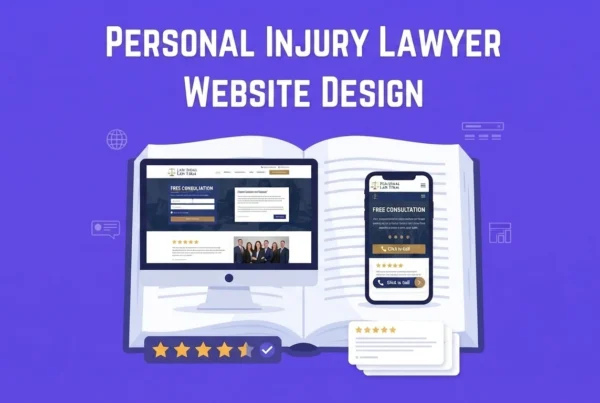
A law firm’s website often creates the first detailed impression of the practice. It should work well on mobile devices, load efficiently, and help visitors find important information easily.
Attorney biographies should accurately describe education, licensing, admissions, experience, and practice areas. The site should also provide office details, contact information, privacy disclosures, and appropriate disclaimers.
Phone numbers and consultation options should be easy to find. Mobile visitors should be able to call quickly, while contact forms should remain simple and avoid requesting unnecessary sensitive information.
The website should also make clear that submitting a form does not automatically create an attorney-client relationship.
3. Invest in SEO for Personal Injury Lawyers
SEO can improve a firm’s visibility for relevant organic searches through keyword research, practice-area content, technical improvements, local optimization, internal links, authority building, and conversion tracking.
Search intent should shape the strategy. Someone asking what to do after an accident may need an educational article, while a person searching for a local truck accident attorney may need a practice-area or location page.
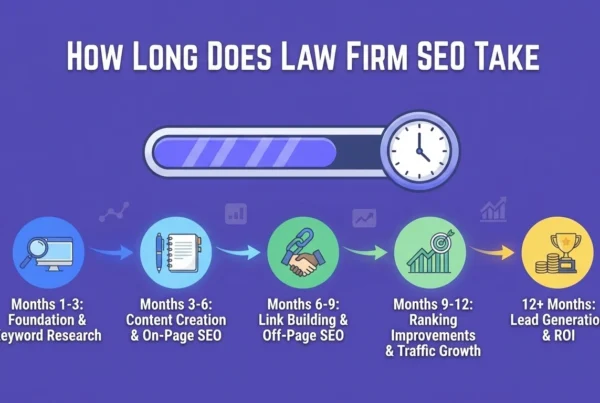
SEO usually requires sustained work and should not be evaluated by traffic alone. The goal is to connect relevant searches with qualified inquiries and consultations.
Firms can learn more about how these components work together through Click Typhoon’s SEO services for personal injury lawyers.
4. Strengthen Local Search Visibility
Personal injury clients often look for attorneys serving their city, county, or state. Local search visibility can help a firm reach people within those areas.
A verified Google Business Profile should contain accurate information, appropriate categories, current hours, authentic photos, and a working website link. The firm’s name, address, and phone number should also remain consistent across trusted directories.
Google explains that local results are mainly influenced by relevance, distance, and prominence. Its local ranking guidance also states that businesses cannot pay Google for better local organic rankings.
Location pages may support local relevance when they describe genuine services and provide useful information. Firms should avoid fake offices, duplicate profiles, and pages that simply replace one city name with another.
5. Publish Attorney-Reviewed Educational Content
Prospective clients often have questions before they are ready to contact a firm. Educational content can help explain topics such as evidence, insurance communication, medical records, fees, deadlines, and the claims process.
Content should use plain language and be reviewed by an attorney or another qualified legal professional. Bylines, reviewer names, reliable sources, and update dates can also improve transparency.
Articles should support relevant practice areas rather than cover unrelated subjects simply because they receive search traffic. Original explanations based on common client concerns usually provide more value than generic summaries.
Video can also support the content strategy when an attorney can explain a difficult topic clearly.
6. Use Paid Advertising With Careful Tracking
Paid search can create visibility faster than organic marketing. It allows firms to target selected keywords, locations, schedules, and devices.
Campaigns should use relevant keywords, geographic controls, appropriate landing pages, and negative keywords that reduce irrelevant searches. Sending every advertisement to the homepage may weaken relevance and make it harder for visitors to find what they need.
Click prices and total lead volume do not tell the whole story. The firm should track qualified inquiries, consultations, and signed cases by campaign and landing page.
Paid advertising can complement SEO by supporting immediate priorities while organic visibility develops over time.
7. Develop an Ethical Review and Reputation Strategy
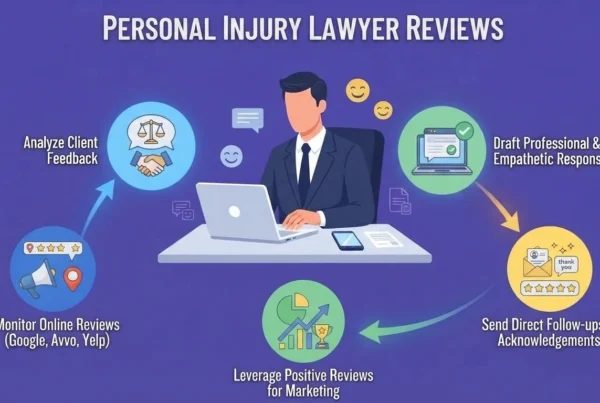
Reviews can influence how prospective clients evaluate a law firm and may also support local visibility.
Firms can create a consistent process for requesting honest feedback without pressuring clients to leave only positive reviews. They should never purchase reviews or fabricate testimonials.
Responses require care because even confirming that someone was a client may create confidentiality concerns. A brief, professional reply is often more appropriate than discussing details of a legal matter.
Reputation management also includes monitoring attorney information, directory listings, social profiles, and public mentions for accuracy.
8. Build Referral and Community Relationships
Digital marketing should not replace professional relationships. Referrals from attorneys, former clients, healthcare professionals, community organizations, and other trusted contacts can remain valuable sources of qualified inquiries.
A firm can build recognition by participating in relevant organizations, supporting community programs, providing legal education, and maintaining professional relationships.
Offline reputation may also strengthen online credibility through local coverage, professional profiles, and relevant organizational listings.
Any referral arrangement must comply with applicable professional conduct rules. Firms should obtain appropriate guidance before offering or accepting anything of value related to referrals.
9. Improve Intake and Measure Qualified Leads
Marketing does not end when someone calls or completes a form. The intake process determines whether the opportunity is identified and handled properly.
Staff should know which questions to ask, how to record the lead source, and when to escalate an inquiry. Calls should be answered whenever practical, and online inquiries should receive timely responses.
The firm should distinguish between an inquiry, qualified lead, consultation, and signed case. These categories provide a more accurate view of marketing performance.
Reports should compare results by channel, practice area, location, and landing page. Cost per qualified lead may be more useful than cost per click, while intake feedback can help the marketing team improve targeting and content.
How Should These Strategies Work Together?
Each strategy supports a different part of the client journey.
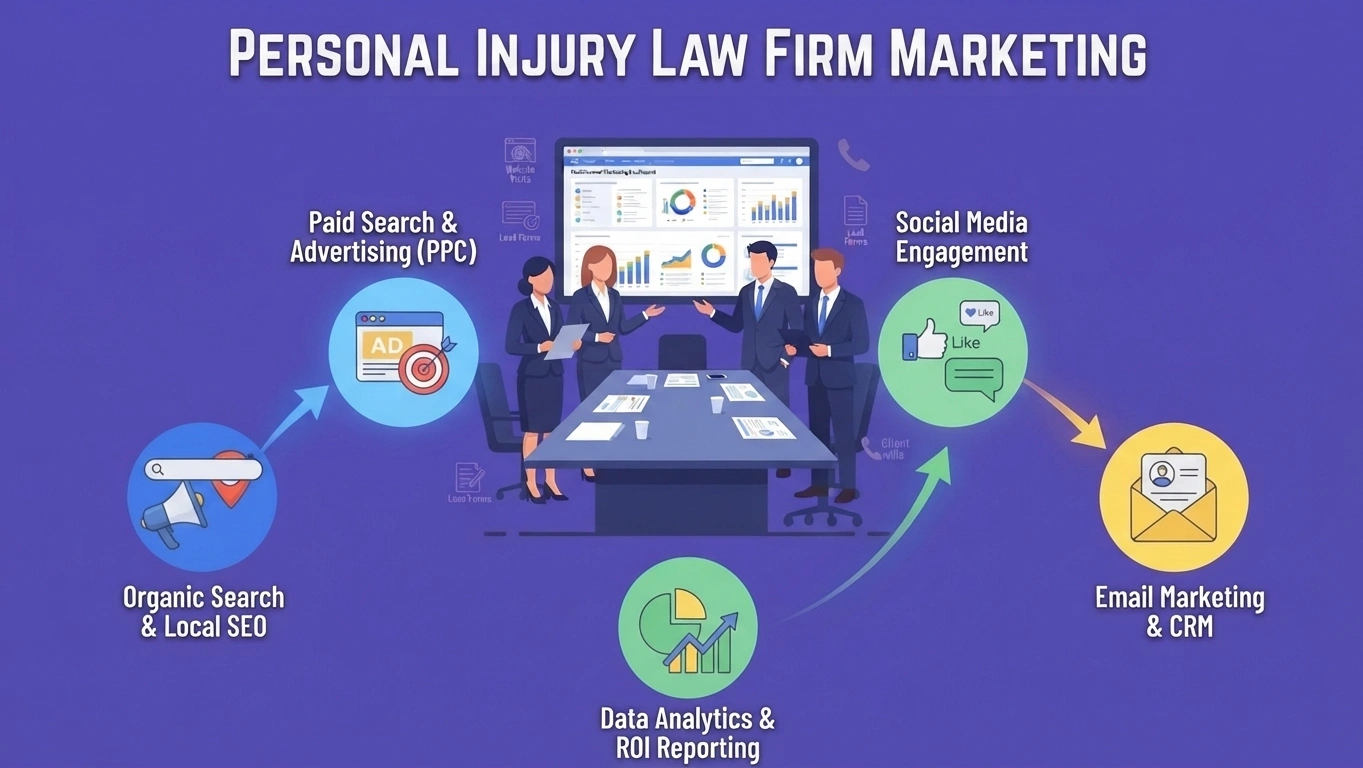
Positioning determines which clients the firm wants to reach. The website communicates services and credibility. SEO and local optimization improve discovery, while paid advertising can create immediate exposure.
Educational content answers questions, reviews strengthen trust, community relationships support recognition, and intake determines whether an opportunity becomes a consultation or case.
Relying on one channel can create unnecessary risk. Search rankings may change, advertising costs can rise, and referral patterns may fluctuate. A balanced plan gives the firm more ways to reach suitable prospective clients.
Common Personal Injury Marketing Mistakes
Firms should watch for problems such as:
- Targeting traffic without considering case quality
- Making unsupported claims about attorneys or outcomes
- Ignoring local search visibility
- Publishing legal content without professional review
- Purchasing links, reviews, or testimonials
- Sending every campaign to the homepage
- Failing to answer or return calls promptly
- Measuring clicks without tracking case outcomes
- Depending on one marketing channel
These mistakes can waste budget, weaken trust, and make performance difficult to evaluate.
What Ethical Rules Apply to Personal Injury Marketing?
Personal injury marketing may involve attorney advertising requirements, testimonials, endorsements, reviews, case results, fee statements, and client confidentiality.
The Federal Trade Commission’s advertising guidance states that advertising claims must be truthful, evidence-based, and neither deceptive nor unfair. Law firms must also follow applicable state bar rules and other professional obligations.
Past results should not be presented as guarantees. Testimonials should be authentic, review responses should protect confidential information, and attorneys should approve legal content and claims about the firm before publication.
Why Choose Click Typhoon for Personal Injury Lawyer Marketing?
Click Typhoon provides SEO services designed for personal injury law firms. Its approach includes local SEO, practice-area content, technical improvements, conversion optimization, and performance tracking.
These services support several parts of a broader marketing strategy. Local SEO helps establish geographic relevance, content explains services and answers client questions, technical optimization improves accessibility, and conversion tracking helps determine whether visitors become inquiries.
Click Typhoon also emphasizes transparency, communication, data-driven decisions, and return on investment. These principles support an SEO campaign focused on meaningful outcomes rather than rankings without context.
Law firms can request a free SEO audit to identify opportunities involving content, local visibility, technical performance, and lead conversion.
Frequently Asked Questions
What is the best marketing strategy for a personal injury law firm?
There is no single best strategy for every firm. A balanced plan may combine positioning, a trustworthy website, SEO, local search, paid advertising, content, reviews, referrals, and qualified-lead tracking.
How much should a personal injury firm spend on marketing?
The appropriate budget depends on the market, competition, target cases, growth goals, and intake capacity. Firms should evaluate cost per qualified lead and signed case instead of basing a budget only on competitor spending.
Is SEO worth it for personal injury lawyers?
SEO may be worthwhile when a firm wants sustainable organic visibility and can invest in useful content, technical improvements, local relevance, and measurement. Results vary and cannot be guaranteed.
Is paid advertising better than SEO?
Paid advertising may create faster visibility, while SEO can build a longer-term organic presence. Many firms use both and compare performance through qualified leads and cases.
Do reviews help personal injury attorneys?
Authentic reviews can help prospective clients evaluate a firm and may support local prominence. Reviews should be requested ethically and handled without exposing confidential information.
Should personal injury lawyers use social media?
Social media may support education, brand familiarity, community engagement, and the distribution of useful content. Firms should choose platforms based on their audience and ability to publish consistently.
How should a law firm measure marketing performance?
Useful measures include qualified inquiries, consultations, signed cases, conversion rates, cost per qualified lead, and results by marketing channel. Traffic and clicks provide context but should not be the only measures.
Build a More Balanced Marketing Plan
Successful personal injury law firm marketing does not depend on a single advertisement, keyword, or platform. It requires clear positioning, credible information, coordinated visibility, ethical communication, and a responsive intake process.
Begin with defined case priorities and reliable tracking. Then invest in channels that produce relevant opportunities rather than simply generating the most activity.
To identify gaps in your firm’s search visibility and lead-generation process, contact Click Typhoon for a free SEO audit and strategy discussion.
Follow us on our socials here:
Check out some of our blogs to help with your SEO needs: