SEO for Personal Injury Lawyers: A Complete Beginner’s Guide
Having a professional website does not automatically mean potential clients will find it. A personal injury law firm may offer valuable services and publish useful information yet remain difficult to discover when people search online.
Search engine optimization helps address that problem. It improves how a website is organized, understood, and presented in search results. For a personal injury firm, SEO can help connect attorneys with people searching for information about accidents, insurance claims, injuries, and local legal representation.
However, SEO should not focus on traffic alone. Visitors need to be in the right location, have a relevant legal concern, and feel confident enough to contact the firm.
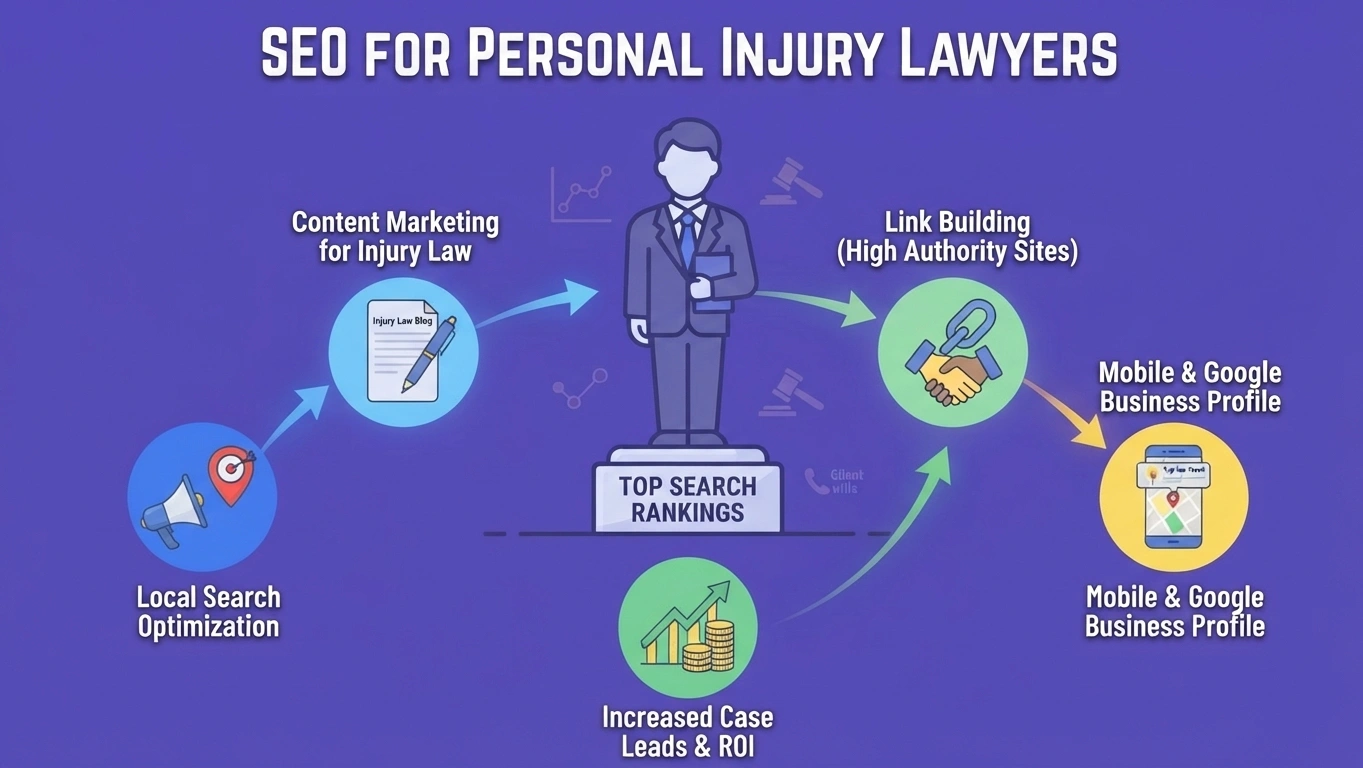
Effective SEO for personal injury lawyers combines useful legal content, local visibility, technical improvements, credible information, and a clear contact experience. This guide explains how those elements work together and what law firms should realistically expect.
What Is SEO for Personal Injury Lawyers?
SEO for personal injury lawyers is the process of improving a law firm’s visibility when people search online for information or representation related to accidents and injuries.
The strategy may include keyword research, practice-area content, local SEO, technical improvements, internal links, reputable backlinks, and conversion tracking. It helps search engines understand what the firm does, where it operates, and which searches its pages may answer.
Effective SEO also considers what happens after someone reaches the website. Visitors should be able to understand the firm’s services, confirm whether it serves their area, evaluate its credibility, and request a consultation.
The goal is not simply to attract more visitors. It is to generate relevant opportunities from people whose location and legal concerns match the firm’s services. SEO cannot guarantee rankings, calls, or signed cases, but it can create a stronger connection between people searching for help and attorneys capable of assisting them.
Why Is Personal Injury SEO So Competitive?
Personal injury law is highly competitive because a suitable case can have significant value to a firm. Local attorneys, regional practices, national brands, legal directories, paid advertisers, and lead-generation websites may all compete for similar searches.
The search itself can also be urgent. Someone involved in an accident may begin researching attorneys within hours or days, making visibility during that decision-making period especially important.
Competition varies by practice area and location. A broad phrase such as “personal injury lawyer” may be harder to target than a specific search connected to an accident type and city.
Smaller firms may benefit from focusing on selected services, locations, and client questions rather than trying to rank for every possible legal keyword.
How Do Search Engines Find Law Firm Websites?
Search engines generally discover webpages by following links and processing information made available by websites. They then store eligible pages in an index and determine which results may be relevant to a particular search.
The Google SEO Starter Guide recommends creating useful content, organizing websites logically, using descriptive links and titles, and making pages accessible to search engines and users.
Being indexed does not guarantee that a page will rank. Search engines evaluate many signals related to relevance, usefulness, website experience, location, and broader recognition.
Paid advertising is also separate from organic search. Paying for Google Ads does not purchase higher organic rankings.
What Is Search Intent?
Search intent describes what a person hopes to accomplish with a query.
Someone searching “what should I do after a car accident” probably wants immediate information. A person searching “truck accident lawyer near me” may be considering legal representation. Someone searching for an attorney by name may be confirming a referral or looking for contact information.
A personal injury website should support these different needs. Educational articles can answer early questions, practice-area pages can explain legal services, location pages can clarify where the firm operates, and attorney biographies can help visitors evaluate the people behind the practice.
Matching each search with an appropriate page creates a better experience than directing everyone to a generic homepage.
How Does Keyword Research Work?
Keyword research identifies the words and questions people use when looking for legal information or services.
A law firm might consider keywords related to car accidents, truck crashes, pedestrian injuries, premises liability, or wrongful death. Local terms may include a city, county, or “near me” language.
Search volume can be useful, but it should not be the only consideration. A high-volume keyword may be extremely competitive or attract people whose needs do not match the firm. A more specific phrase may receive fewer searches while producing more relevant inquiries.
Keywords should guide the subject and structure of a page, not be repeated unnaturally. Clear writing that answers the reader’s question is more valuable than keyword stuffing.
Which Pages Does a Personal Injury Website Need?
A law firm website usually needs several types of pages, each with a clear purpose.
The homepage should introduce the firm, its main services, and the areas it serves. Practice-area pages should explain specific case types, while attorney biographies should provide accurate information about credentials, licensing, admissions, experience, and responsibilities.
Location pages may be useful when the firm genuinely serves different markets and can provide original information for each one. Educational articles can answer common questions about evidence, insurance communication, deadlines, medical records, fees, and the claims process.
A contact page should make it easy to call or submit an inquiry. The website should also include appropriate privacy information, disclaimers, and required disclosures.
Internal links should connect related pages naturally.
Why Is Local SEO Important?
Most personal injury firms serve specific cities, states, or legal jurisdictions. Local SEO helps search engines and prospective clients understand that geographic connection.
A complete Google Business Profile may display the firm’s contact information, reviews, hours, website link, photos, and directions. The public name, address, and phone number should remain accurate and consistent across the website and trusted directories.
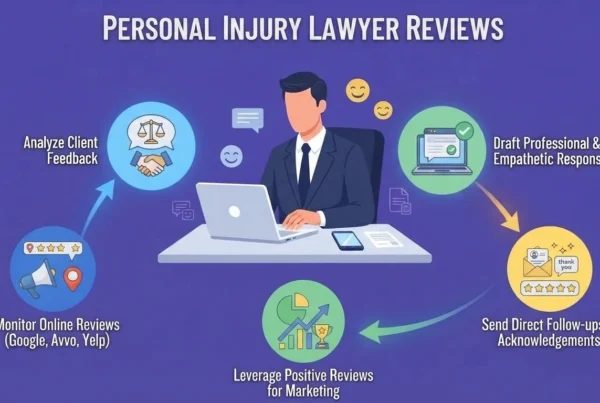
Reviews can support trust, but they must be obtained honestly. Firms should not purchase reviews or disclose confidential information when responding to feedback.
Local SEO may also include useful location pages and locally relevant resources. Firms should avoid fake office listings or pages that simply replace one city name with another.
How Can Legal Content Build Trust?
People searching after an accident may be dealing with pain, medical expenses, lost income, and uncertainty. Helpful content can reduce confusion and explain when professional advice may be appropriate.
Legal articles should use clear language without oversimplifying important issues. They should distinguish general information from advice based on a person’s specific circumstances.
Attorneys or qualified legal reviewers should verify legal statements before publication. Bylines, reviewer names, source links, update dates, and accurate attorney biographies can also improve transparency.
Publishing more pages does not automatically create more authority. A smaller collection of accurate, useful resources may provide more value than a large collection of generic articles.
What Does E-E-A-T Mean for Law Firms?
E-E-A-T refers to experience, expertise, authoritativeness, and trustworthiness. It is a useful framework for evaluating the credibility of website content.
A law firm can demonstrate these qualities through accurate attorney profiles, clear authorship, relevant professional experience, reliable sources, transparent contact information, and carefully reviewed legal explanations.
Case results, awards, and testimonials should be presented honestly and with appropriate context. Previous results do not guarantee a similar outcome in another case.
A website should not fabricate credentials, exaggerate experience, or make unsupported claims. Sustainable SEO works best when the online presentation reflects the firm’s real people, knowledge, services, and reputation.
What Is Technical SEO?
Technical SEO helps search engines access and understand a website while supporting a usable experience for visitors.
A law firm website should function well on smartphones, load efficiently, and provide readable text with clear navigation. Search engines should be able to crawl important pages, while duplicate or private areas should be managed correctly.
Other considerations include redirects, broken links, page titles, canonical tags, internal links, structured data, security, and site architecture. Structured data should accurately match what visitors can see on the page.
Technical improvements can make a website easier to discover and use, but they do not guarantee rankings.
What Are Backlinks?
A backlink is a link from another website to the law firm’s site. Relevant links can help search engines discover pages and understand that other sources recognize the firm or its information.
Useful links may come from professional organizations, local groups, legal publications, news coverage, partnerships, or original resources that others choose to reference.
Quality matters more than quantity. Buying large link packages, using private networks, or submitting a website to thousands of irrelevant directories may create risk without meaningful value.
A reputable provider should explain how it plans to earn or acquire links and report where those links appear.
How Does SEO Turn Visitors Into Leads?
Search visibility creates an opportunity, but the website still needs to help visitors take the next step.
Phone numbers should be easy to find, especially on mobile devices. Forms should be simple and avoid requesting unnecessary sensitive information. The website should clearly describe the firm’s services, locations, attorneys, and consultation process.
It should also explain that submitting a form does not automatically create an attorney-client relationship.
The intake process matters as much as the website. Unanswered calls or slow follow-up can waste opportunities generated by SEO. Marketing and intake teams should work together to understand which inquiries are suitable and where they came from.
How Should a Law Firm Measure SEO?
A successful campaign should be evaluated through several stages:
- Search impressions and rankings
- Organic website visits
- Calls and contact-form submissions
- Qualified inquiries
- Consultations scheduled
- Cases signed
- Cost per qualified lead
- Results by practice area, location, and page
Rankings and traffic can show whether visibility is improving, but they are not final business outcomes. One page may attract many visitors and produce no suitable cases, while another receives less traffic but generates strong consultations.
Google Search Console, analytics, call tracking, and intake records can each provide part of the picture. The firm should retain access to these accounts and data.
How Long Does Personal Injury SEO Take?
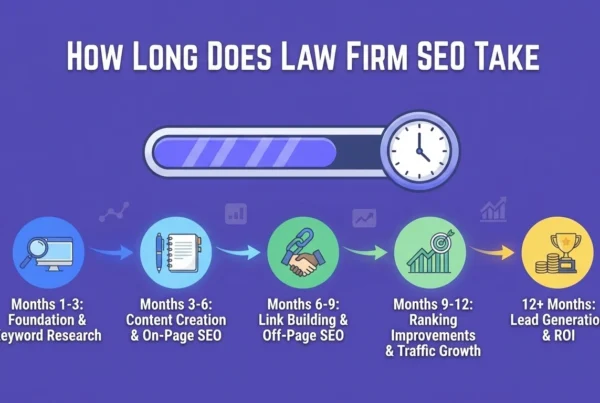
There is no fixed timeline. Results may depend on competition, website history, technical condition, content quality, local reputation, links, budget, and how quickly approved work is implemented.
An agency can provide timelines for audits, content, technical fixes, and tracking setup. It cannot control the exact date when rankings or leads will change.
SEO is generally an ongoing process because competitors, websites, user behavior, and search systems continue to evolve.
What SEO Mistakes Should Beginners Avoid?
Common mistakes include:
- Repeating keywords unnaturally
- Publishing generic or inaccurate legal content
- Creating duplicate location pages
- Using fake offices or reviews
- Buying manipulative backlinks
- Ignoring mobile visitors
- Treating every call as a qualified lead
- Expecting immediate results
- Giving an agency complete ownership of essential accounts
Avoiding shortcuts can protect the firm’s website, reputation, and long-term visibility.
What Ethical Rules Apply to Legal SEO?
Law firms must consider attorney advertising rules, confidentiality, testimonials, case results, fee claims, reviews, and professional conduct requirements.
The Federal Trade Commission states that advertising claims must be truthful, evidence-based, and neither deceptive nor unfair. State bars and other regulatory bodies may impose additional requirements.
Legal content should be reviewed before publication. Testimonials should be genuine, case results should include appropriate context, and review responses should not reveal confidential details.
An SEO agency can support marketing, but the law firm remains responsible for approving what is published on its behalf.
Should a Personal Injury Firm Hire an SEO Agency?
A firm may handle some basic SEO internally, but professional support can be useful when the website requires technical work, ongoing content, local optimization, or detailed performance tracking.
Before hiring an agency, ask about its strategy, deliverables, methods, reporting, communication, ownership terms, and contract conditions. The provider should be able to explain what it will do and why.
Avoid agencies that guarantee first-place rankings, claim a special relationship with Google, or refuse to explain their methods. The firm should retain access to its website, domain, Google Business Profile, analytics, and Search Console accounts.
Why Choose Click Typhoon for Personal Injury SEO?
Click Typhoon provides SEO services developed for personal injury law firms. Its approach includes local SEO, practice-area content, technical optimization, conversion improvements, and performance tracking.
This integrated strategy connects different parts of the client journey. Local SEO builds geographic relevance, content explains services and answers questions, technical improvements help users and search engines access the website, and conversion optimization makes it easier for suitable visitors to contact the firm.
Click Typhoon also emphasizes data-driven decisions, communication, transparency, and return on investment. These principles help connect SEO activity with qualified inquiries rather than rankings alone.
Law firms can explore Click Typhoon’s SEO services for personal injury lawyers and request a free SEO audit to identify content, technical, local, and conversion opportunities.
Frequently Asked Questions
Is SEO worth it for personal injury lawyers?
SEO may be worthwhile for firms that want to build sustainable organic visibility and reach people actively searching for relevant legal help. Its value depends on the strategy, competition, website, intake process, and quality of the resulting inquiries.
How much does personal injury SEO cost?
Costs vary based on market competition, target locations, website condition, content requirements, technical work, and campaign scope. Firms should request a clear proposal showing what is included and how success will be measured.
Does a personal injury firm need a blog?
A blog is not mandatory, but educational articles can answer relevant client questions and support practice-area pages. Every article should have a clear purpose and provide useful, accurate information.
Is SEO better than paid advertising?
SEO and paid advertising serve different purposes. Paid campaigns can create faster visibility, while SEO may build a longer-term source of organic traffic. Many firms use both and compare qualified lead results.
How can a law firm measure qualified SEO leads?
The firm should define its qualification criteria and record each inquiry’s source, location, case type, consultation status, and outcome. This information can show which pages and topics generate suitable opportunities.
Start Building a Stronger Search Presence
SEO for personal injury lawyers involves much more than selecting keywords. It combines useful content, local visibility, technical performance, trust, ethical marketing, and conversion measurement.
The best place to begin is with a realistic assessment of the website, target market, practice areas, and intake process. From there, the firm can prioritize improvements based on their potential value.
To identify opportunities for your law firm, contact Click Typhoon for a free SEO audit and a strategy discussion focused on qualified personal injury leads.
Follow us on our socials here:
Check out some of our blogs to help with your SEO needs: